Cozy Living Room for Small Spaces: A Step-by-Step Guide (With Before & After Looks)
This post contains product links. As an Amazon Associate, I earn from qualifying purchases made through these links. Learn more.
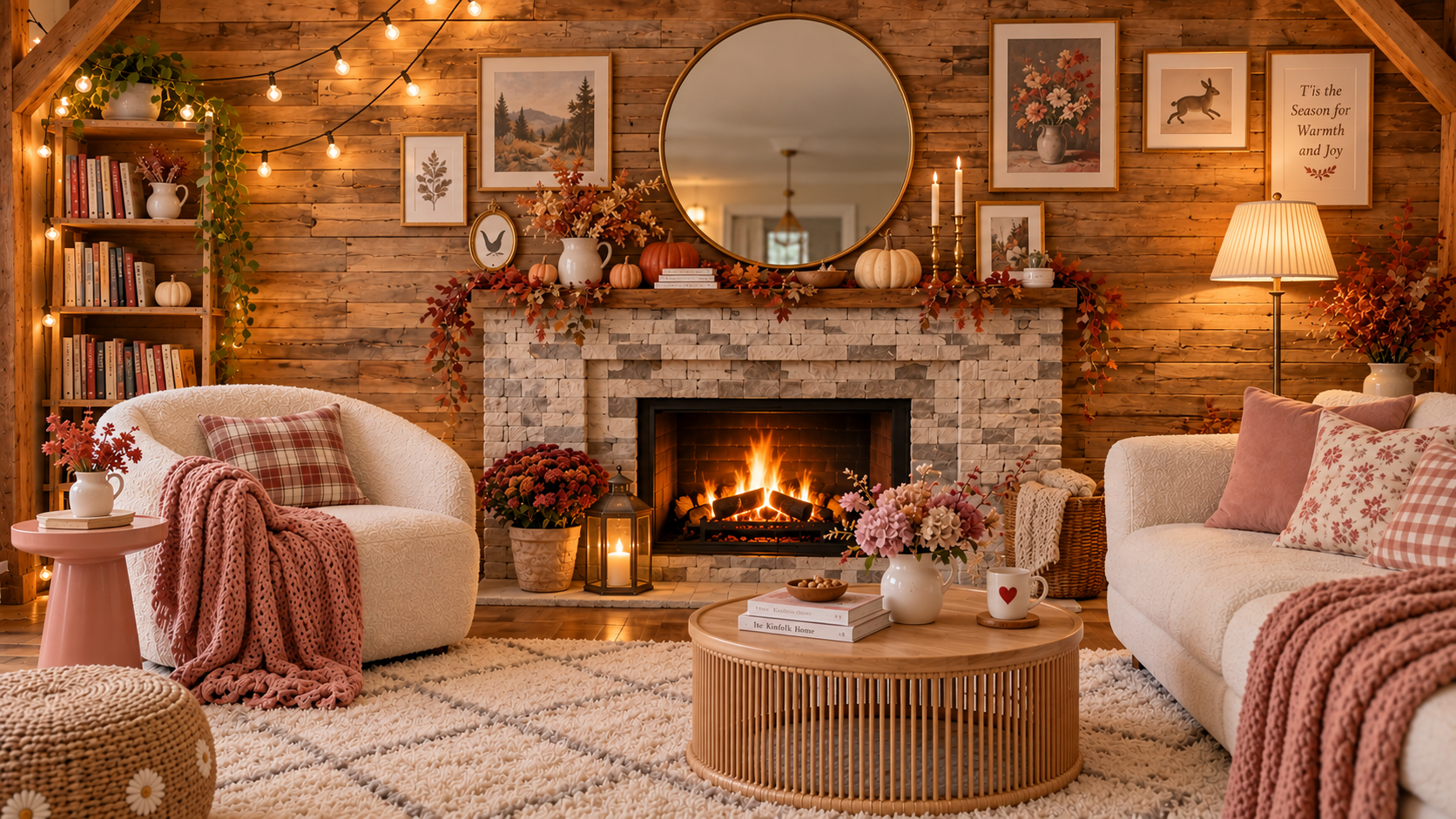
A small living room has a way of getting stuck between two extremes. Push everything against the walls and it feels like a waiting room. Add every throw and candle you own and it feels crowded. The truth is, a cozy living room for small spaces isn’t about more stuff or more square footage.
It’s about placing a few good pieces well, then layering warmth on top. Get the order right and even a tight room starts to feel like the place you want to land after a long day.
Here’s the plan: arrange first, choose right-sized furniture, warm up the palette, layer the light, then add texture and finishing touches. We’ll end with one small room, before and after, so you can see how the steps stack up.
What Makes a Cozy Living Room for Small Spaces Work?
Cozy is a feeling, but it comes from three things you can control: layout, light, and layers. Layout decides whether the room feels open or boxed in. Light decides whether it feels warm or clinical. Layers, like rugs, textiles, wood, and greenery, decide whether it feels lived-in or bare.
Small rooms make each of these matter more. A bulky sofa in the wrong spot, one harsh ceiling light, or a bare floor shows up instantly, because the eye has nowhere else to rest. The upside is that a few smart changes go a long way.
Think of the steps below as an order of operations for how to decorate a living room step by step: big decisions first, small styling last. It’s tempting to start with pillows. Resist it.
Step 1: Plan Your Layout (A Basic Guide to Arranging Furniture)
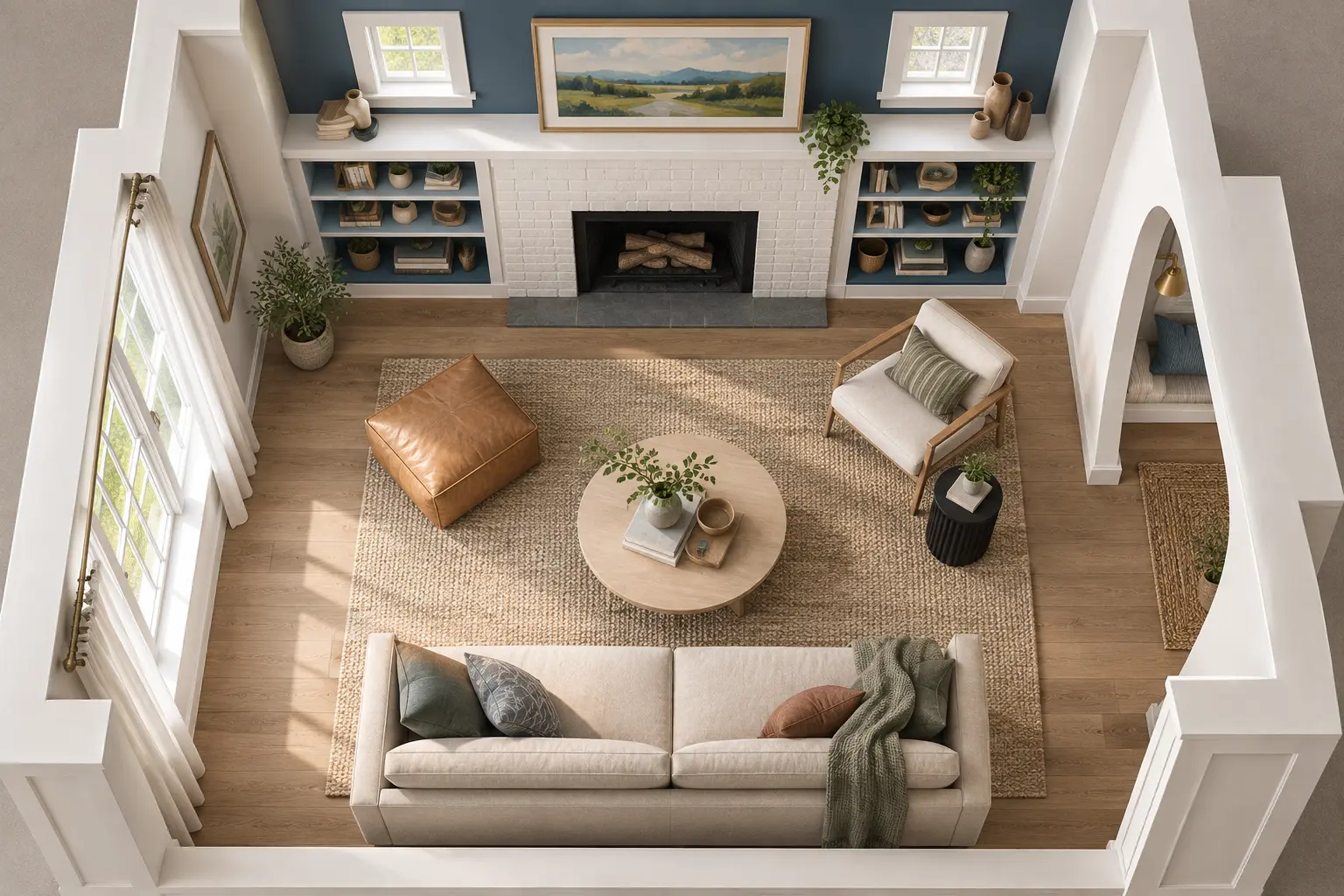
Layout is the one step that costs nothing and changes everything. Before you buy anything, measure the room and sketch where the sofa, chairs, and tables will go. A free online room planner like Planner 5D lets you drag furniture around a scaled version of your space, so you can test a layout without lifting a single piece.
Pull Your Furniture Off the Walls
It feels logical to push everything against the walls to free up the middle. In a small room, it does the opposite. A sofa flush to every wall makes the room feel like a hallway with seating, and the empty center reads as wasted space.
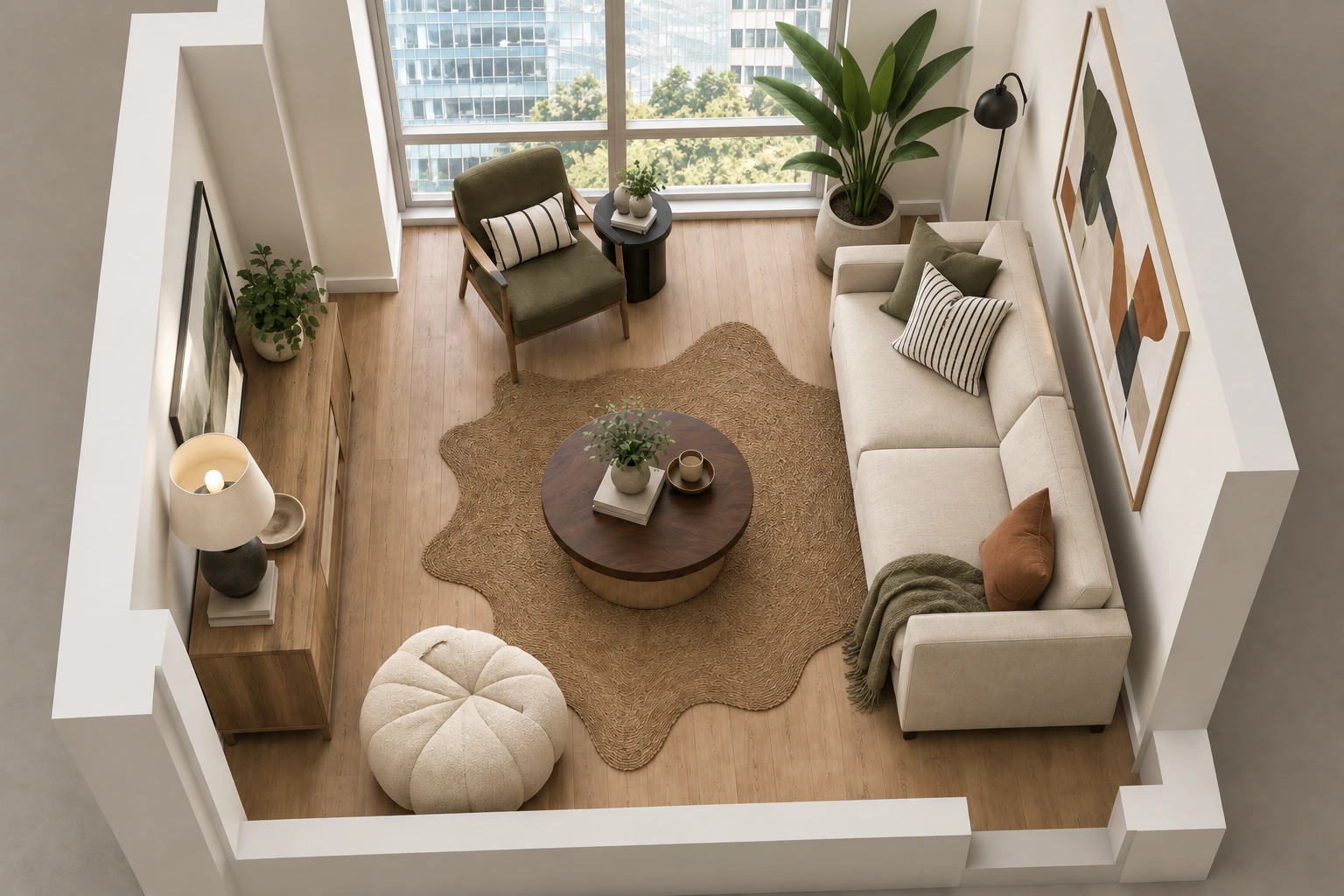
Instead, float the main pieces a few inches out. Even a little breathing room behind the sofa adds a shadow line and a sense of depth. Pulling seating slightly inward also makes the conversation area feel more intimate.
Spacing Guidelines:
- Minimal breathing room: Pull sofas and large chairs 3 to 5 inches from the wall to prevent a flat, cramped look.
- True floating layout: Leave 12 to 24 inches (or more, if space allows) behind pieces to establish a distinct conversation zone or a pathway.
- Walkways: Keep a clear path of 30 to 36 inches for main traffic routes, though tight small spaces can drop down to 18 to 24 inches.
- Between seats: Keep seating areas no less than 3.5 feet and no more than 10 feet apart so people can talk easily
Choose a Focal Point for Your Living Room
Every room needs one place the eye lands first. Without it, a small space feels busy and directionless. Your focal point is usually something already there: a window with a view, a fireplace, or a wall that can hold a large piece of art.
If you’re wondering how to choose a focal point in a living room, look for the strongest feature and arrange the seating to face or flank it. If the TV is the obvious candidate, that’s fine. Just anchor the wall around it with shelves or art so the room doesn’t revolve around a black rectangle.
Layouts for Narrow, Square and Studio Rooms
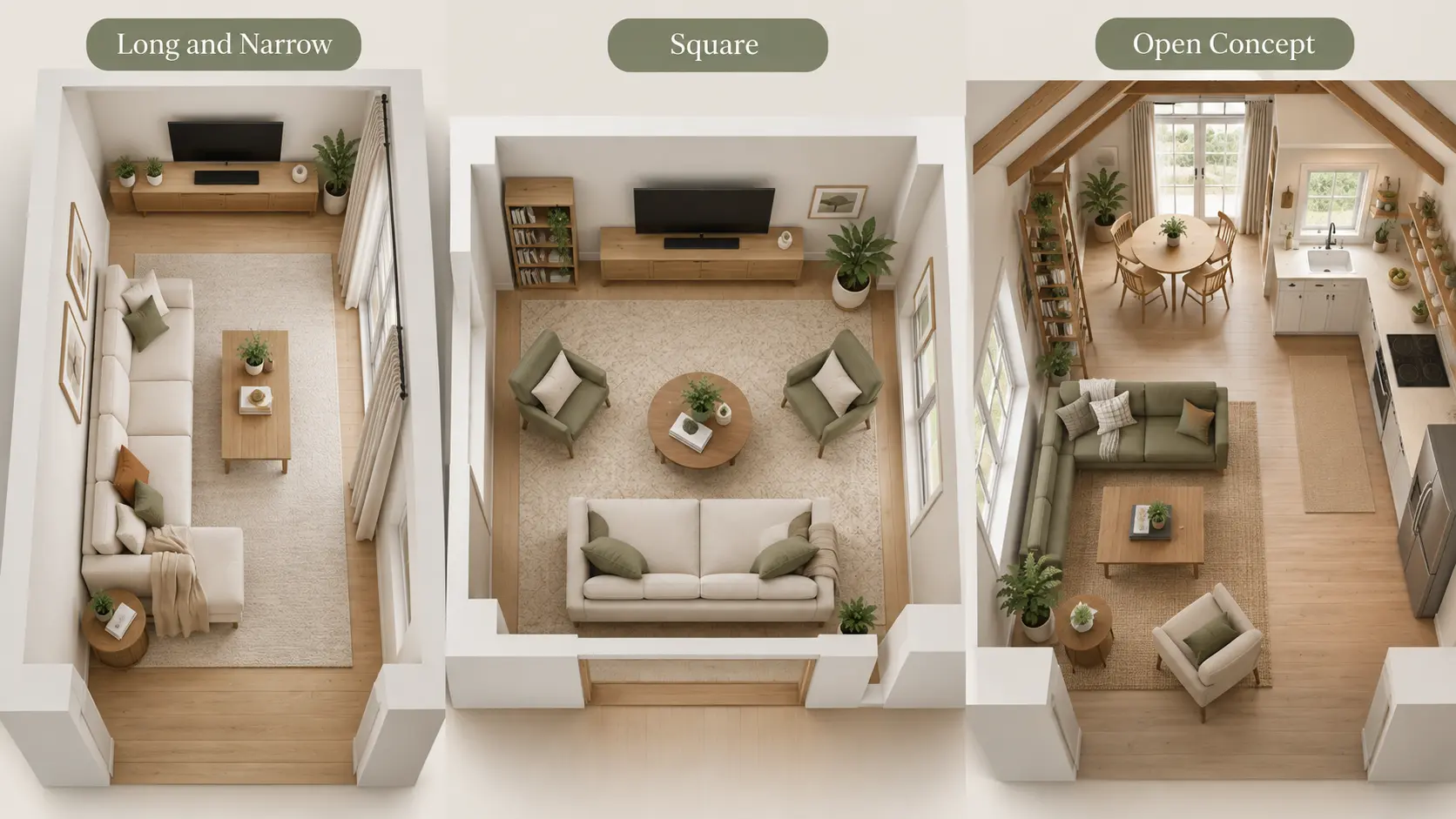
- Long and narrow: Run the sofa along one long wall and set a pair of chairs or a bench opposite, so seating faces each other instead of lining up single file. Keep a clear walkway along one side.
- Square: An L-shape or a facing pair works well: a sofa plus two chairs around a compact coffee table, with the rug centered under the group.
- Studio or open concept: Let a rug define the living zone and turn the sofa’s back toward the kitchen or sleeping area, so it doubles as a soft divider.
Whatever the shape, leave a clear path through the room. If you have to sidestep a furniture to cross it, something needs to move.
Step 2: Choose Cozy but Compact Furniture
Scale Your Sofa to the Room
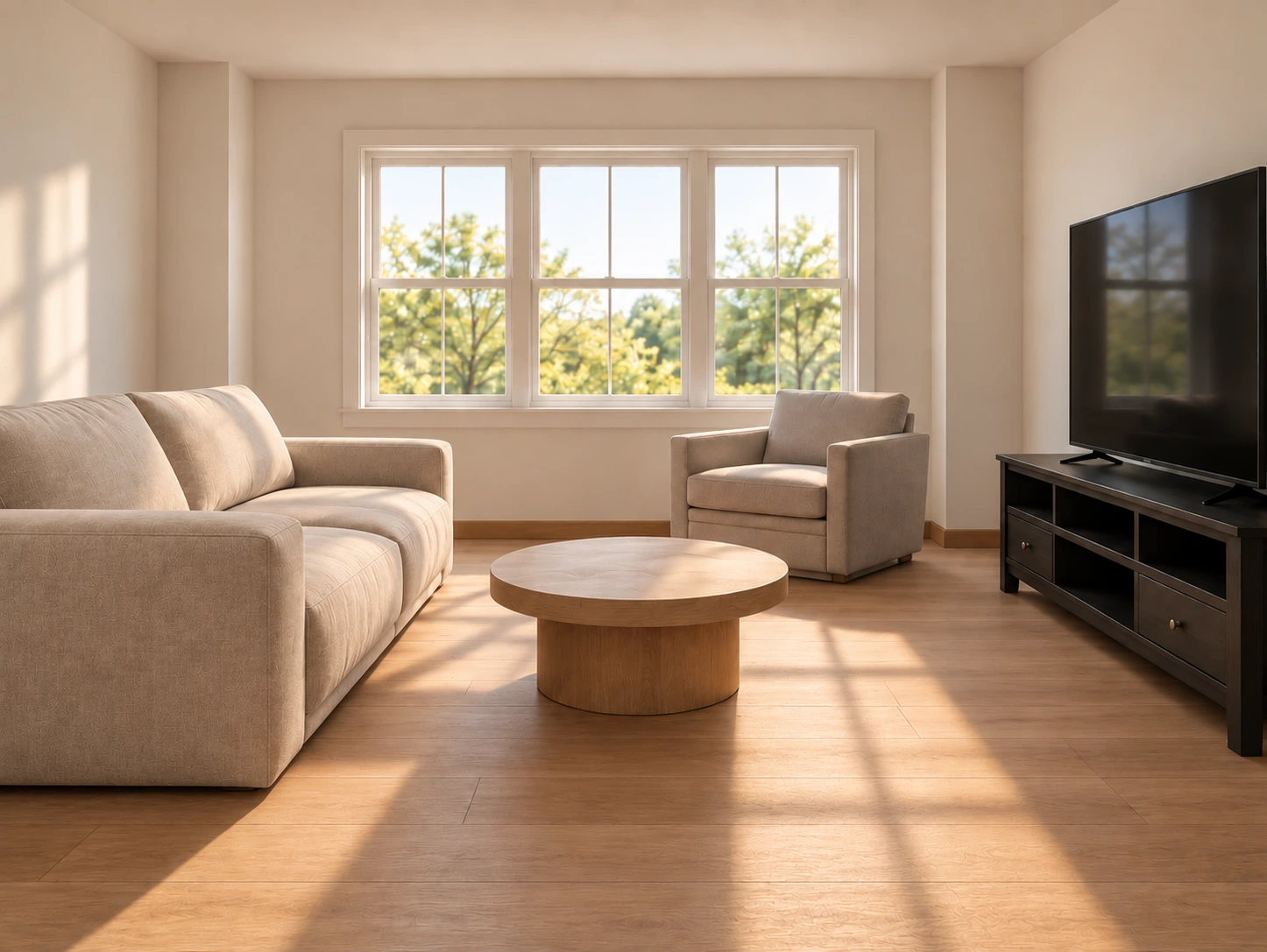
Deep, oversized seating is the classic cozy advice, but in a small room it can swallow the floor. Look for a loveseat, an apartment-size sofa, or a compact sectional that tucks into a corner and leaves the rest of the floor usable. Soft upholstery and a couple of plump cushions give you the sink-in feel without the bulk.
Pick Pieces With Raised Legs
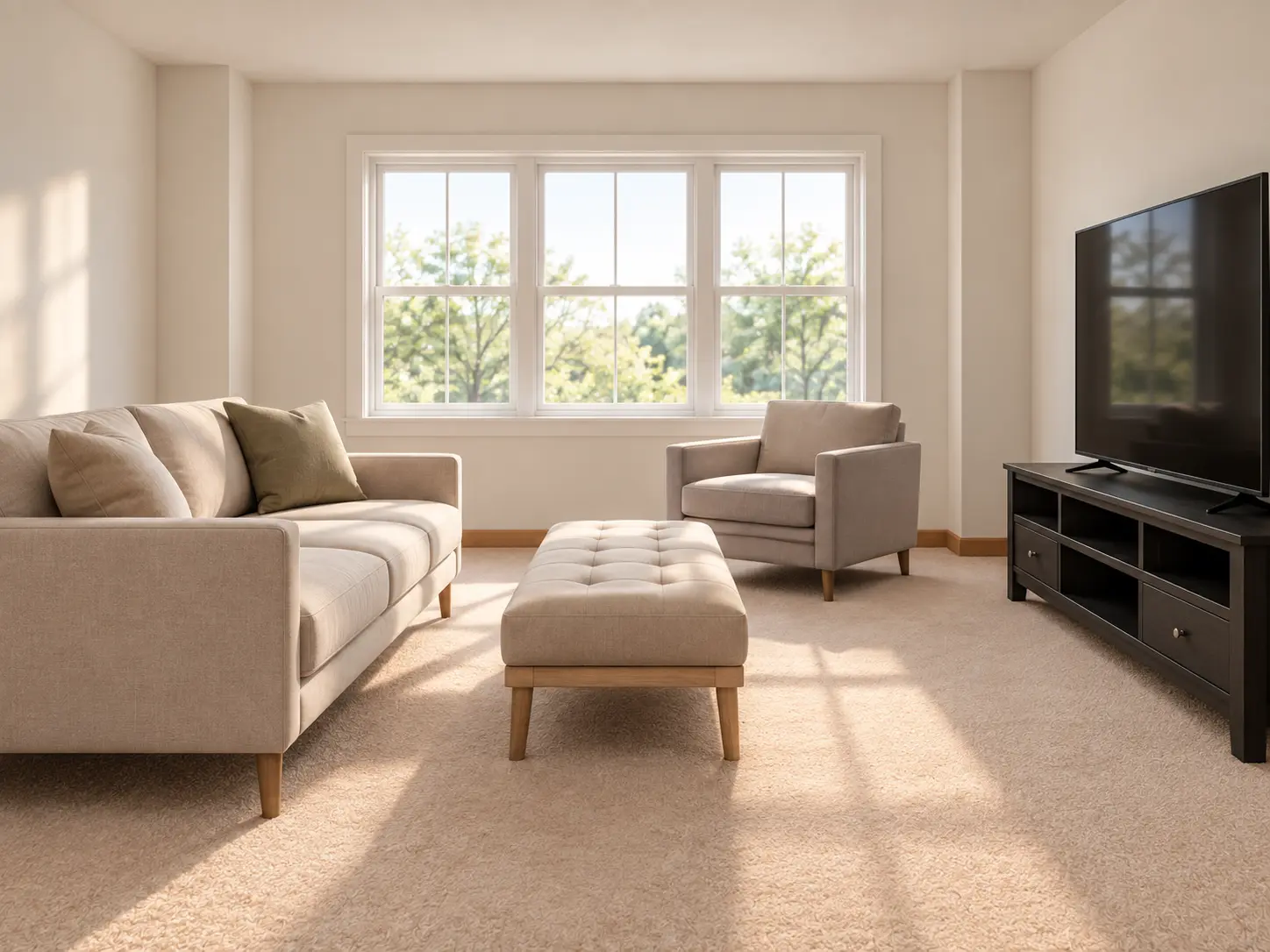
Furniture with visible legs lets the eye travel underneath, so you see more floor and the room reads as larger. Skirted or floor-hugging pieces stack up visual weight. Choose sofas and chairs on slim wood or metal legs, and leave a strip of floor showing.
Let Furniture Do Double Duty
Every piece in a small living room should earn its footprint. A folding storage Ottoman bench works as a footrest on movie night, extra seating when friends stop by, and a hiding place for spare blankets the rest of the week.
For surfaces, industrial nesting coffee tables slide together when you need floor space and spread apart when you’re hosting. Their metal frames and wood-look tops sit easily beside warm, textured fabrics.
Step 3: Warm Up the Color Palette
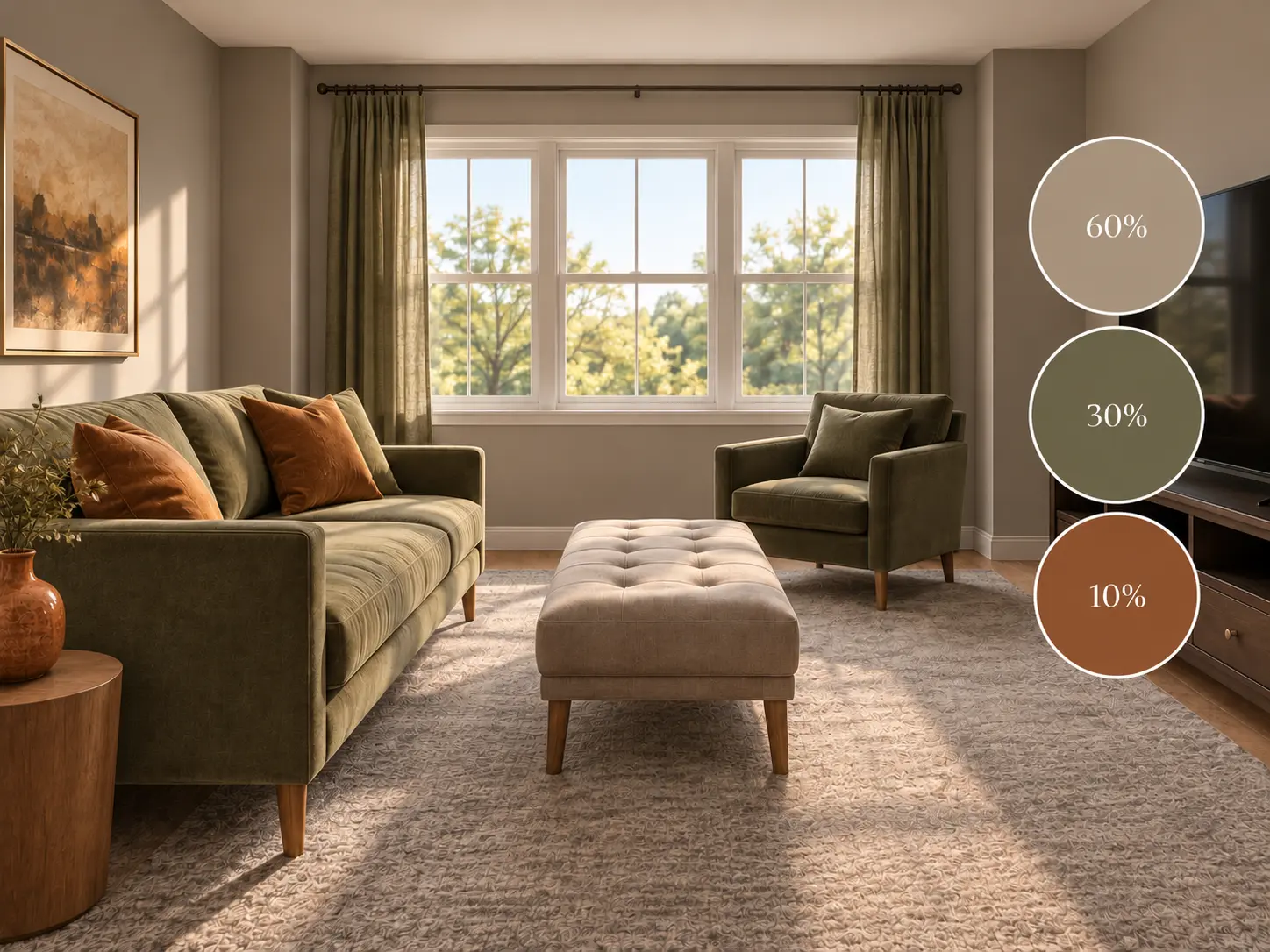
Stark white and cool gray can make a small room feel like a showroom. Warm neutrals do the opposite: they make the walls feel like they’re wrapping around you. Think creamy beige, soft greige, warm taupe, sage green, or a muted terracotta.
For a cohesive look, pick one main color family and one or two supporting tones, then repeat them across pillows, art, and throws. Designers often use a rough 60-30-10 split for this: mostly your main color, a good amount of a second, and a small pop of an accent. That repetition is the quiet trick behind a room that looks pulled together rather than thrown together.
If painting isn’t an option, let textiles do the work. Curtains, a rug, and a large throw can shift the whole palette without touching a wall.
Step 4: Layer Your Lighting
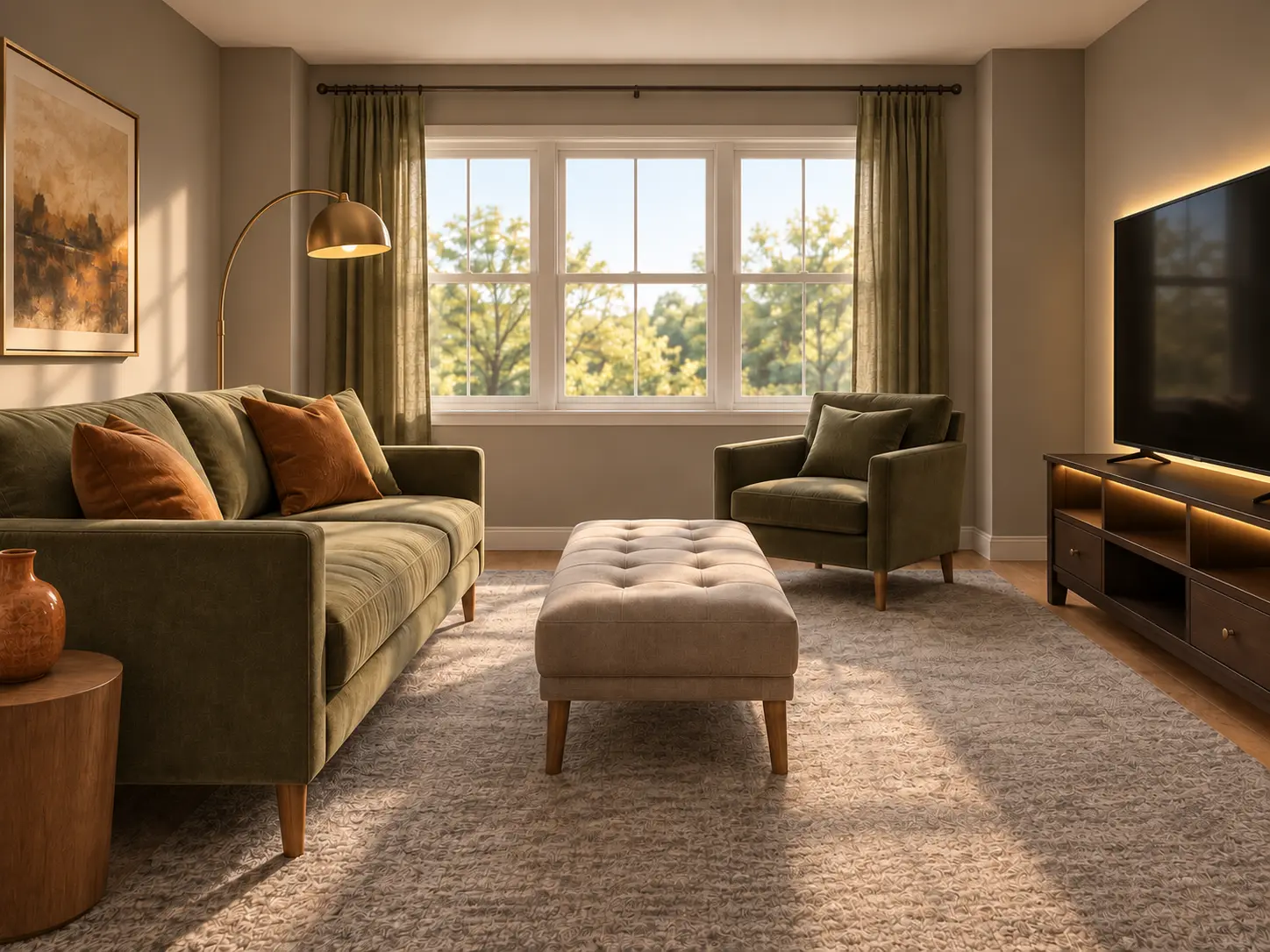
One overhead light is the fastest way to make a cozy room feel like an office. It flattens the space, throws harsh shadows, and leaves the corners dark. Cozy lighting comes from several low, warm sources at different heights.
Start with the bulbs. Look for ones marked 2700–3000K, the range that this lighting guide points to for a warmer light. Then add lamps at different heights. A arc floor lamp reaches over a sofa arm or reading chair, giving you a pool of light without sacrificing a side table.
For a glow that takes up zero floor space, tuck LED strip lights on a warm white setting behind a shelf, a TV stand, or the back of the sofa. Aim for a soft wash on the wall rather than a visible line of light. And if your room has a dimmer switch, use it: lower is almost always cozier.
Step 5: Layer Textures and Decor for Depth
This is where a small room goes from tidy to inviting. Layering decor simply means stacking different textures and materials so the eye has something to travel across. In a small space, add texture rather than objects. Fabric and natural materials take up almost no floor, while knick-knacks take up all of your attention.
Start With the Rug
A rug is the foundation layer. It defines the seating area, softens hard floors, and warms the room underfoot. A natural-fiber option like the natural fiber jute rug adds an earthy, woven texture that pairs with almost any palette.
Size matters more than pattern here. A rug that’s too small makes furniture look like it’s drifting. This rug size guide suggests either resting the front legs of your seating on the rug or sizing down so no legs touch it. In a small room, front legs on usually feels the most connected.
Mix Throws, Pillows and Natural Materials
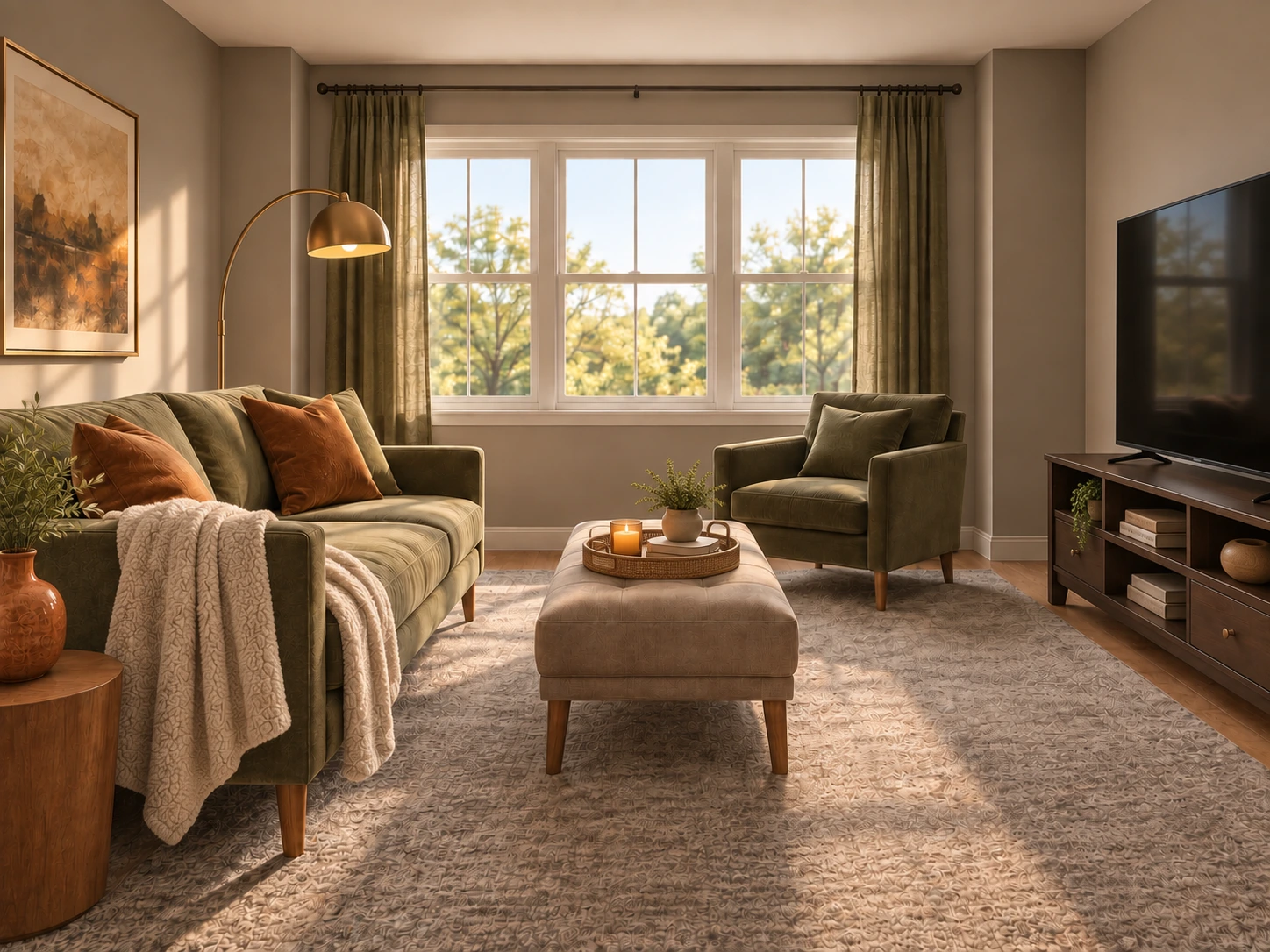
Next, add soft layers you can swap and move. Drape a sherpa fleece throw blanket over the arm of the sofa, where it softens the line of the furniture and stays within reach on chilly nights.
Then vary your pillows. corduroy pillow covers bring a ribbed texture that looks richer than it costs, and they layer well with smoother linen or knit covers.
Aim for three or four textures in the room, such as jute, corduroy, knit, and wood, repeated in small doses. Add a wood side table, a woven basket, or a leafy plant to keep it grounded. That’s the whole secret to layering decor for depth: contrast in texture, harmony in color.
Step 6: Style Your Accessories
Accessories are the finishing touch, and in a small room, editing matters more than adding. Everything on view should be either useful or something you love.
Styling a Coffee Table Tray
A tray turns a cluttered coffee table into a composed one. Gather a candle, a small stack of books, and a little greenery on a round rattan serving tray, and the surface reads as one styled moment instead of five loose objects. The woven texture adds another layer of warmth, too.
Shelves: Edit Down and Group in Odd Numbers
On shelves, resist filling every inch. Group objects in threes or fives, vary the heights, and leave some empty space so each piece can breathe. A horizontal stack of books, a small plant, and one meaningful object beat a full row of everything.
One Statement Piece vs. a Cluttered Gallery Wall
Gallery walls are lovely, but a crowded one can overwhelm a small room. One large piece of art, hung with its center around eye level, does more for a compact wall and reinforces your focal point.
Cozy Living Room Ideas for Small Spaces That Add Depth
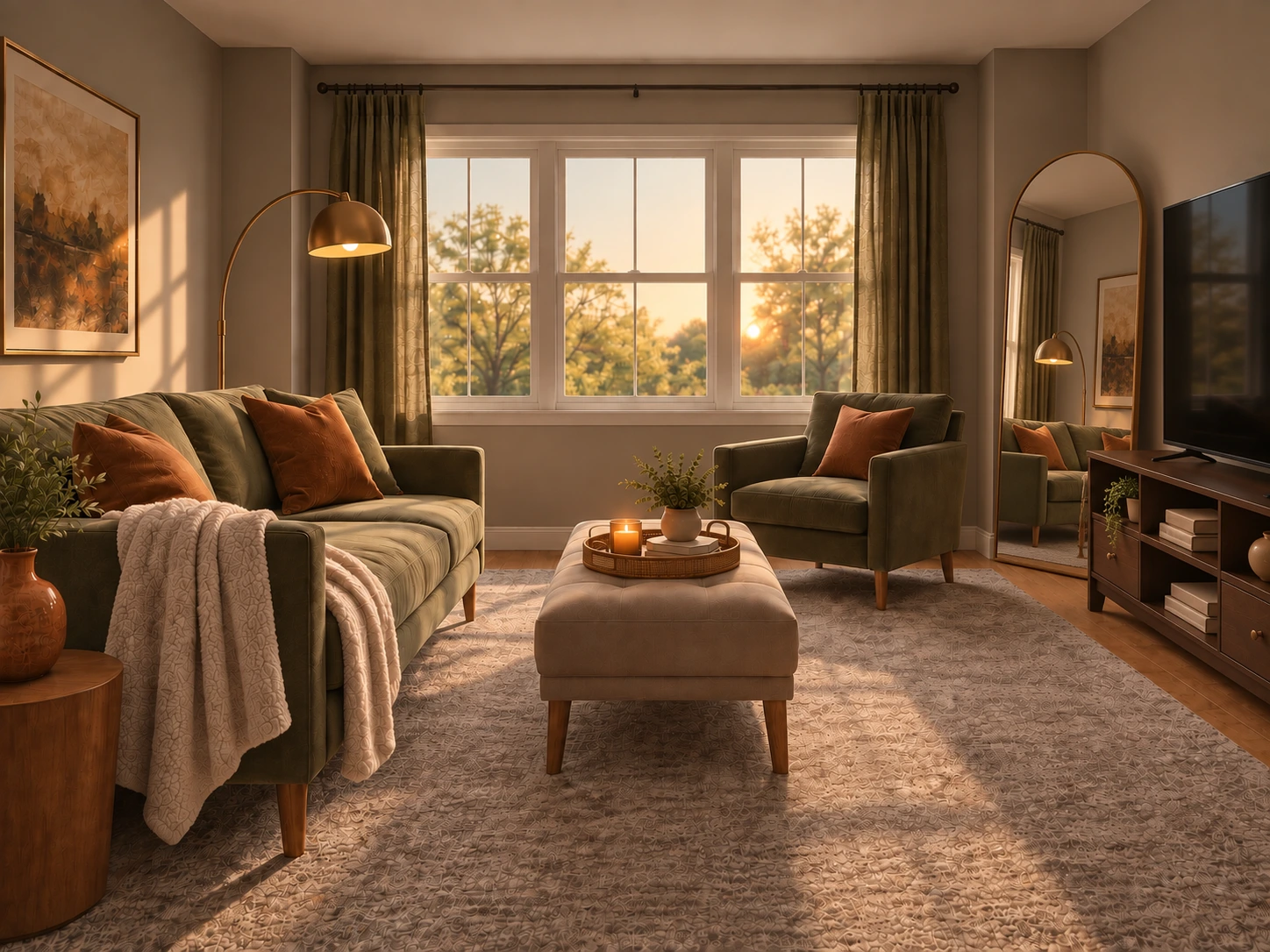
Once the cozy layers are in, borrow a few classic tricks to make the room feel larger without losing the warmth.
- Use a mirror to pull in light. Lean an arched full-length floor mirror across from or beside a window, and it bounces daylight deeper into the room. The arch softens the hard lines of the space, too.
- Hang curtains high. Mount the rod close to the ceiling and let the panels reach the floor. linen textured curtains in a warm neutral add softness at the window and, hung high, make the walls look taller.
- Go vertical with storage. Floating shelves or a slim bookcase use wall space so the floor stays open.
Decorating Mistakes That Make a Small Living Room Look Cheap
Some of the fastest ways to make a room look cheap have nothing to do with budget. Watch for these:
- Pushing every piece against the walls. It makes the room feel boxy. Float the main pieces instead.
- Relying on one overhead light. It flattens everything. Layer warm lamps at different heights.
- Buying a rug that’s too small. It chops the room into pieces. Size up so the front legs of the seating land on it.
- Matching everything. A perfectly matched set can feel more showroom than home. Mix finishes and textures.
- Scattering lots of small decor. Clutter reads as cheap. Group objects and edit down.
- Hanging curtains at the window frame. It cuts the wall short. Hang them high and let them reach the floor.
A cozy room isn’t one you finish. It’s one you keep adjusting until it feels like yours. Start with the layout, add warm light, then let texture do the rest. Even one change tonight, like pulling the sofa forward or swapping a bulb, will make the room feel different.
Frequently Asked Questions (FAQs)
How do I make a cozy living room for small spaces without it feeling cramped?
Start with layout: float furniture slightly off the walls, choose compact pieces with raised legs, and keep a clear path through the room. Then add warmth through light and texture instead of extra objects.
How can I make a living room cozy on a budget?
Begin with free changes like rearranging and decluttering. Then add low-cost layers such as warm 2700K bulbs, a throw, and pillow covers. Save your money for a rug that fits and curtains you love.
How do I decorate a living room effectively?
Work in order: layout and focal point, furniture scale, color palette, lighting, then textures and accessories. Deciding the big things first keeps you from buying decor that doesn’t fit.
H3
- All Posts
- Aesthetic Lovers
- Cozy Foundations
- Great Finds
- Home Chefs
- Intentional Parents
- Pet Lovers
- Productivity Seekers
- Room Inspirations
- Smart Finds