Here’s something that doesn’t get said enough when improving your home: you can have the most beautiful furniture, the most carefully chosen paint color, and the perfect rug — and yet, the room will still feel wrong.
Why?
Simply because the lighting is off – the invisible layer of every great interior, and yet it’s usually the last thing people address.
Light is the emotional filter of a room. It determines whether a space feels warm and welcoming or cold and impersonal. And when it’s wrong, everything else looks wrong with it.
If you’ve been looking for warm lighting ideas for rooms that actually create visible, emotional impact — not just surface-level tips — this guide will walk you through some of the strategies that designers rely on to make spaces feel layered, calm, and intentional.
Understand Kelvin Ratings Before Your Buy Anything
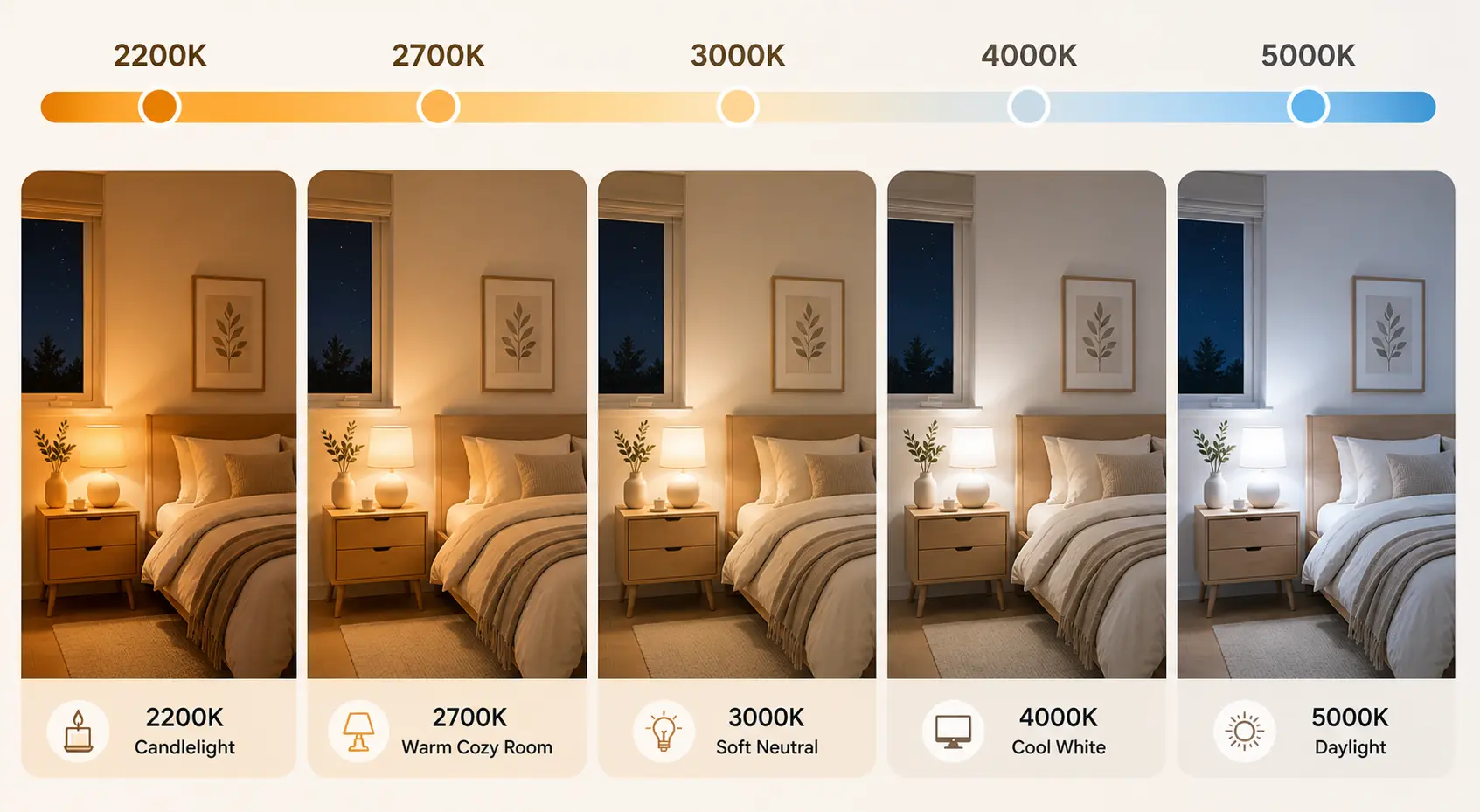
Warmth in lighting comes down to one number: Kelvin (K).
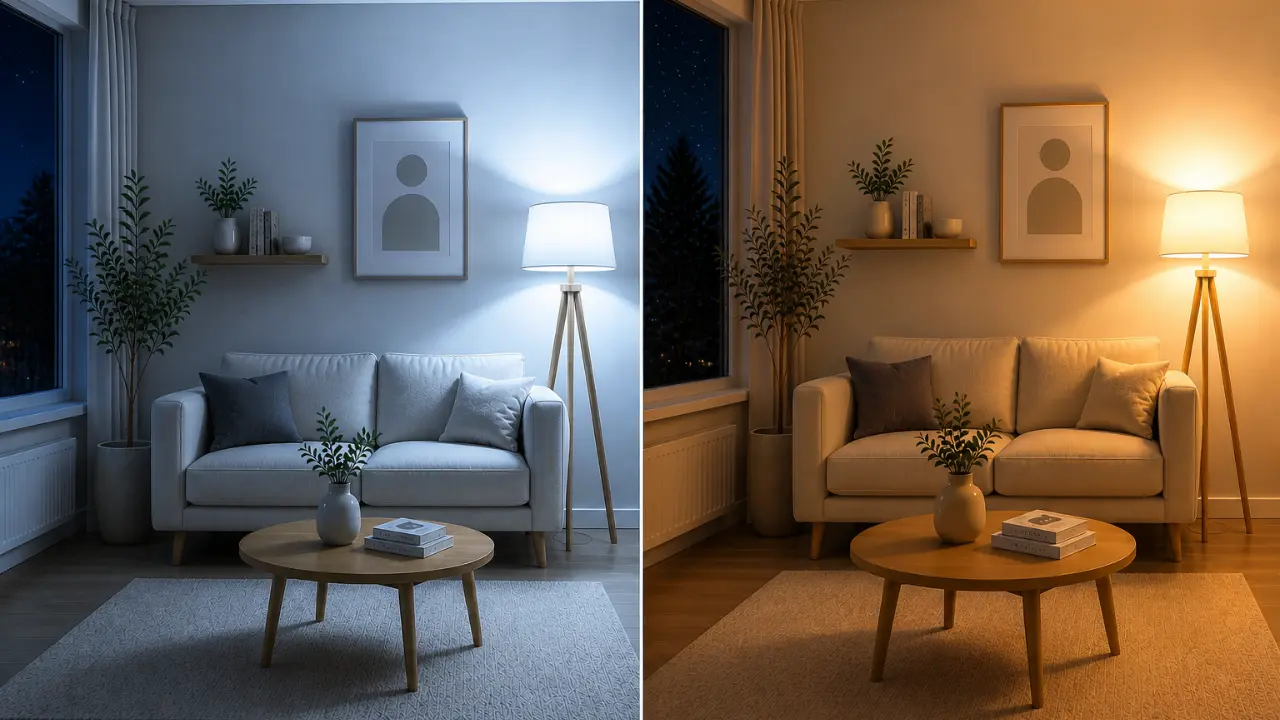
Kelvin measures color temperature — whether light appears golden and soft or bright and blue-toned.
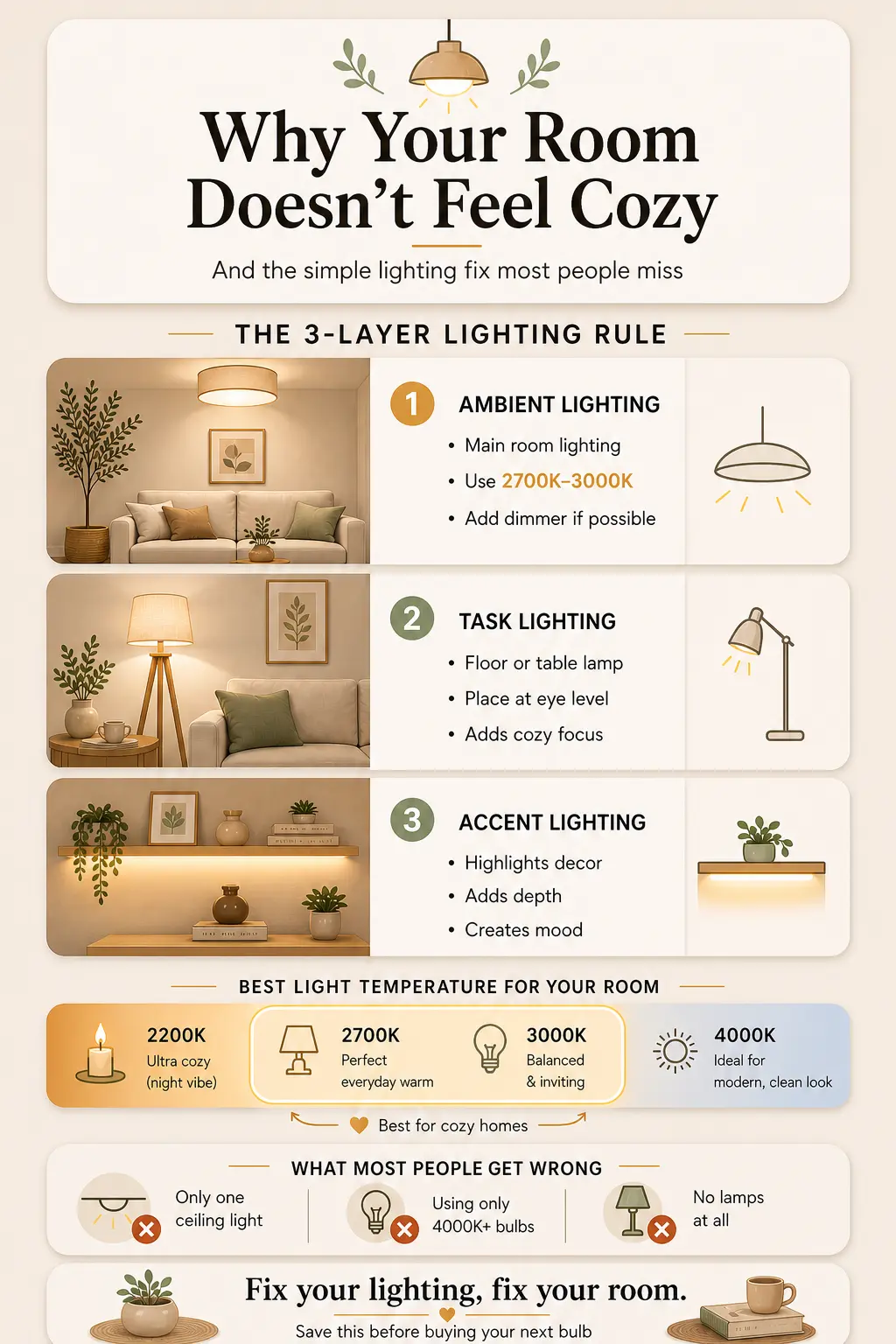
For living rooms, bedrooms, and dining spaces, the ideal range sits between 2700K and 3000K. This range mimics late-afternoon sunlight or candlelight — warm, flattering, and comfortable on the eyes.
Here’s what happens outside that range:
- Above 4000K → light begins to look stark and clinical
- Below 2200K → light turns very amber and can feel overly orange in larger rooms
The key takeaway: stop focusing on wattage and start checking Kelvin ratings on the box.
Swapping in a 2700K LED bulb can dramatically soften a room within minutes, no need for rewiring nor renovation.
If you want flexibility, a smart bulb kit with tunable white light allows you to adjust from cozy evening tones (around 2200K) to brighter daytime light when needed. It’s one of the highest ROI upgrades for renters and homeowners alike.
Use Layered Lighting (The Professional Method)
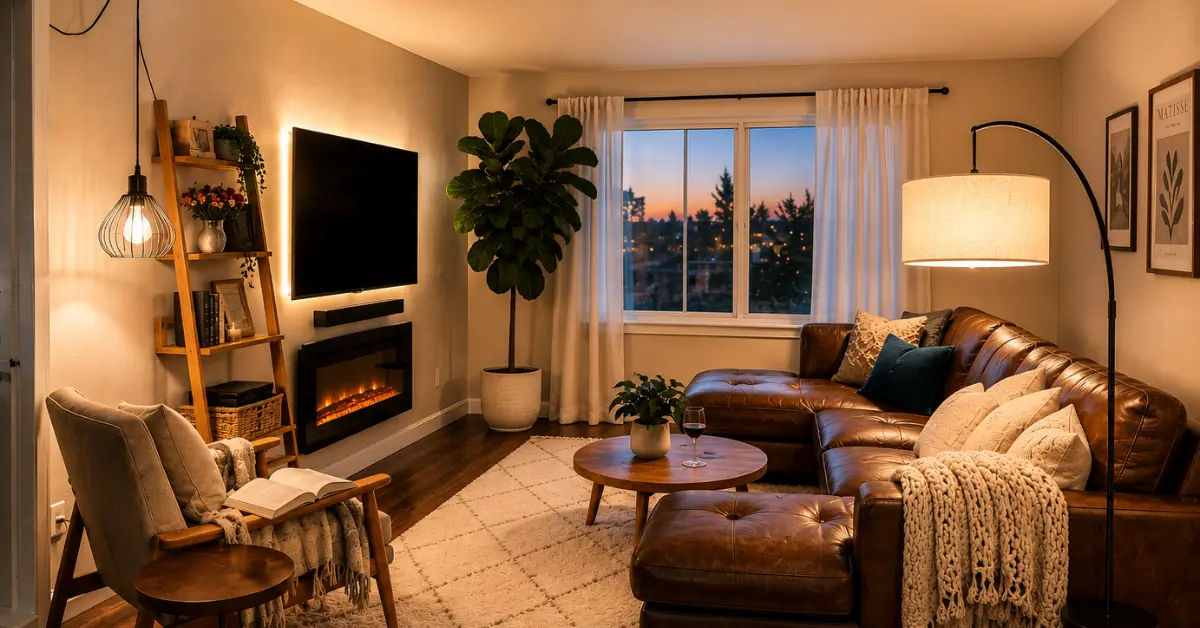
Walk into a thoughtfully designed room and you’ll notice something immediately: the light comes from multiple sources.
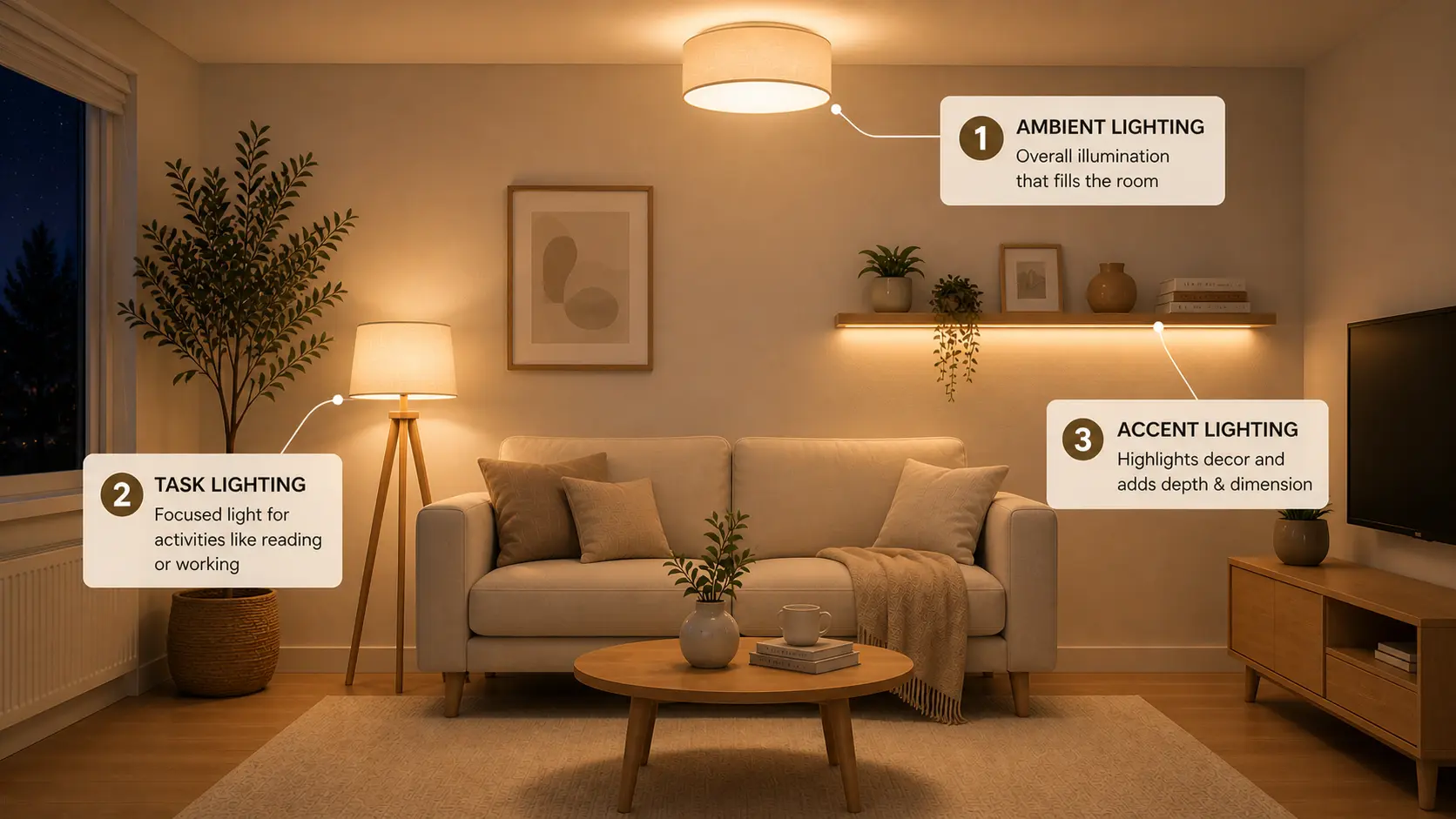
Designers rely on layered lighting — combining:
- Ambient light (overall room illumination)
- Task lighting (focused, functional light)
- Accent lighting (decorative highlights)
When these layers work together, a room feels dimensional instead of flat.
Here’s how to build that structure.
Start With Ambient Light
This is your base layer, often a ceiling fixture or recessed lighting.
If possible, install a dimmer switch. Dimming warm bulbs not only reduces brightness but deepens their warmth, making the room feel more intimate instantly. Even a basic fixture feels elevated when paired with warm-toned, dimmable bulbs.
Add Table and Floor Lamps (Where the Warmth Lives)
This layer is where real coziness happens.
A rattan or linen-shaded floor lamp in an empty corner does more than brighten the space — it fills visual gaps and adds softness. Fabric shades diffuse light, spreading warmth across walls rather than spotlighting one harsh area.
Use different heights throughout the room so light lands at eye level when seated. That placement feels the most natural and flattering.
Finish with Accent Lighting
Accent lighting brings personality.
Think:
- LED strip lights behind shelving or under a media console
- Small picture lights over artwork
- Directional spotlights on architectural details
These subtle touches create depth and highlight the pieces you’ve intentionally chosen. Without accent lighting, decor disappears into shadow.
Choose Fixtures that Add Style and Function
Fixtures aren’t just practical — they’re decorative statements. When chosen carefully, they provide impact even when switched off.
Pendant Lighting
A single oversized pendant lighting over a dining table or kitchen island defines the area immediately.
Look for warm-reflective materials like clear glass, brushed brass, aged bronze, or woven rattan. Pair it with a warm bulb and the fixture becomes both focal point and mood-setter.
Sculptural Table Lamps
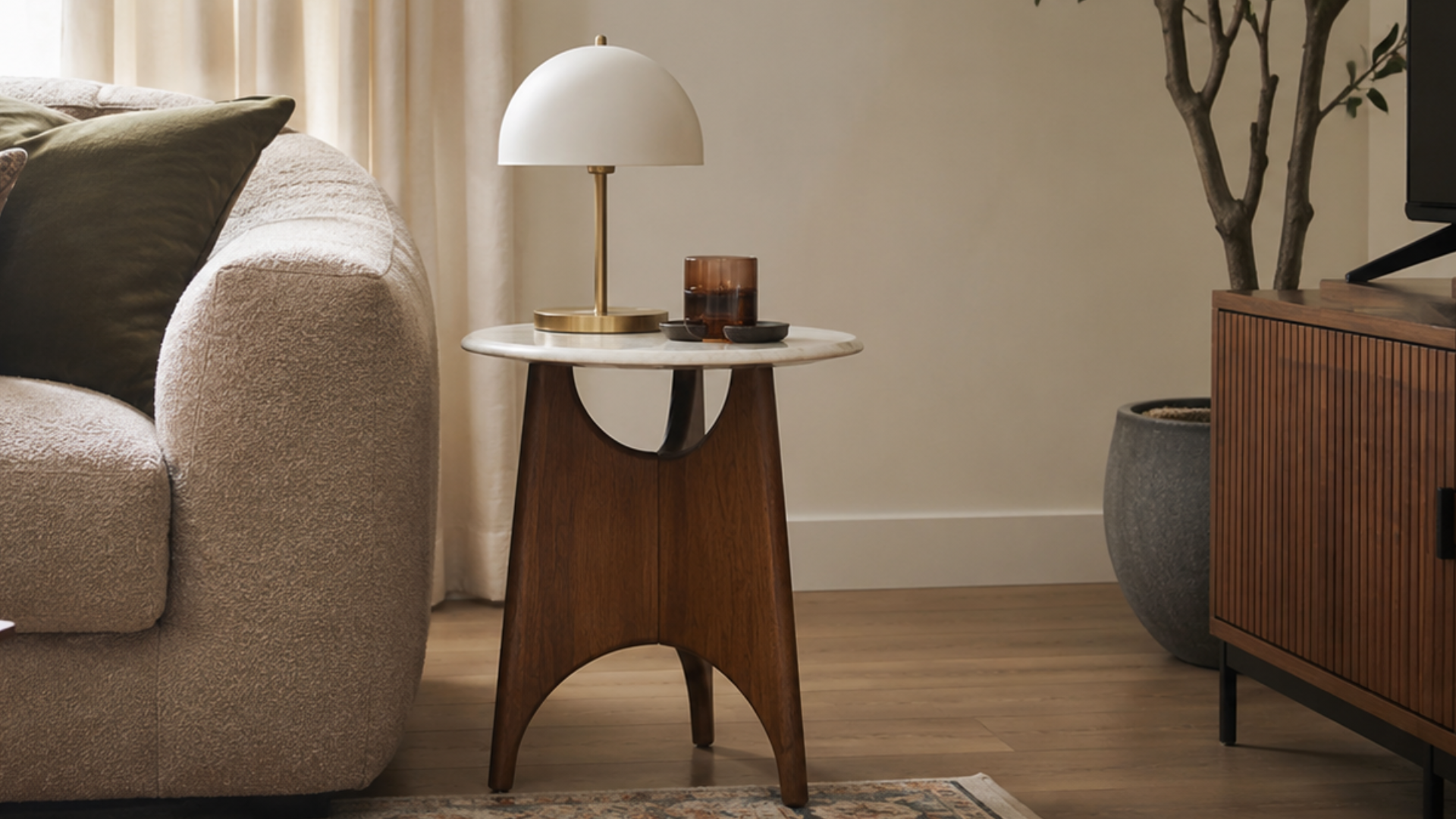
A ceramic table lamp with a linen drum shade adds soft illumination while acting as decor in its own right.
High-quality materials matter here. A well-proportioned lamp with a textured base elevates a room far more than lightweight acrylic or plastic alternatives.
Statement Ceiling Fixtures
A bohemian woven pendant chandelier introduces warmth from above — an often ignored dimension in lighting design.
By visually lowering the ceiling, these fixtures make larger rooms feel more intimate and enclosed in a comforting way.
Wall Sconces
Wall sconces add horizontal balance without occupying surface space. Placed on either side of a bed, mirror, or fireplace, a pair of warm-toned sconces makes walls feel styled and intentional while contributing to layered light.
Underrated Warm Lighting Upgrades
So how about non-dramatic changes that require no wiring at all? These designer-approved lighting tools will be your shortcut to an instant vibe shift.
Candle-Flicker LED Bulbs
Candle-flicker LED bulbs mimic real flame movement and create subtle visual warmth that static bulbs can’t replicate. Placed in lanterns or exposed fixtures, they deliver instant ambiance with minimal energy use.
Warm White Fairy Lights (2200K)
Used strategically, these fairy lights inside glass vases, woven through shelving, or draped along a headboard, fairy lights add depth and gentle sparkle.
Avoid cool white versions; stick to 2200K–2700K for a refined look.
Plug-in Edison Bulb Pendant
This is one of the fastest room transformations available.
Hung from a ceiling hook and plugged into a wall socket, a plug-in pendant light provides that exposed filament glow (around 2200K) designers love — warm, flattering, and visually interesting.
Installation takes minutes, but the design impact feels deliberate.
Warm-Toned LED Light Strips (2700K)
Led light strips installed under floating shelves, along bed frames, or behind televisions, create indirect glow that highlights architectural lines.
Skip color-changing RGB versions if your goal is timeless, cozy design.
Himalayan Salt Lamp
While not a main light source, a Himalayan salt lamp emits a soft amber glow that enhances warmth in bedrooms and living rooms. It doubles as a sculptural decor element, adding texture and natural character.
Cordless Rechargeable Table Lamp (2200K)
A cordless rechargeable table lamp with a 2200K setting gives you total placement freedom — coffee tables, bookshelves, outdoor patios.
No wires means flexibility. And flexibility means you can add warmth exactly where a room needs it.
Make Your Decor Work with Your Lighting
Warm lighting interacts directly with wall color, furniture materials, and textiles.
Creams, warm whites, terracotta, sage, and beige reflect warm light beautifully, amplifying its effect. Natural woods and warm metals (brass, bronze, gold) also appear richer under 2700K bulbs.
If your room leans heavily gray or cool-toned, overly warm bulbs may dull the palette. In that case, adjustable smart lighting lets you fine-tune the balance.
Textiles matter too.
Upgrading to linen or velvet lampshades dramatically improves how light diffuses. Fabric absorbs and scatters light more gracefully than plastic or thin synthetic shades. A well-chosen shade can make an average bulb feel premium.
Final Thoughts: Good Warm Lighting is an Emotional Upgrade
When you combine:
- The correct Kelvin range
- Layered placement
- Quality fixtures
- Warm-reactive materials
You don’t just brighten a room, you change how it feels.
Warm lighting softens edges. It flatters faces. It invites people to sit longer. It transforms even modest decor into something intentional.
And the best part?
Most of these upgrades require no renovation… just smarter choices.
- All Posts
- Aesthetic Lovers
- Home Chefs
- Intentional Parents
- Pet Lovers
- Productivity Seekers
- Smart Finds