Make Your Tiny Bedroom Look Big: Designer Tricks for Paint, Mirrors & Furniture Placement
This post contains product links. As an Amazon Associate, I earn from qualifying purchases made through these links. Learn more.
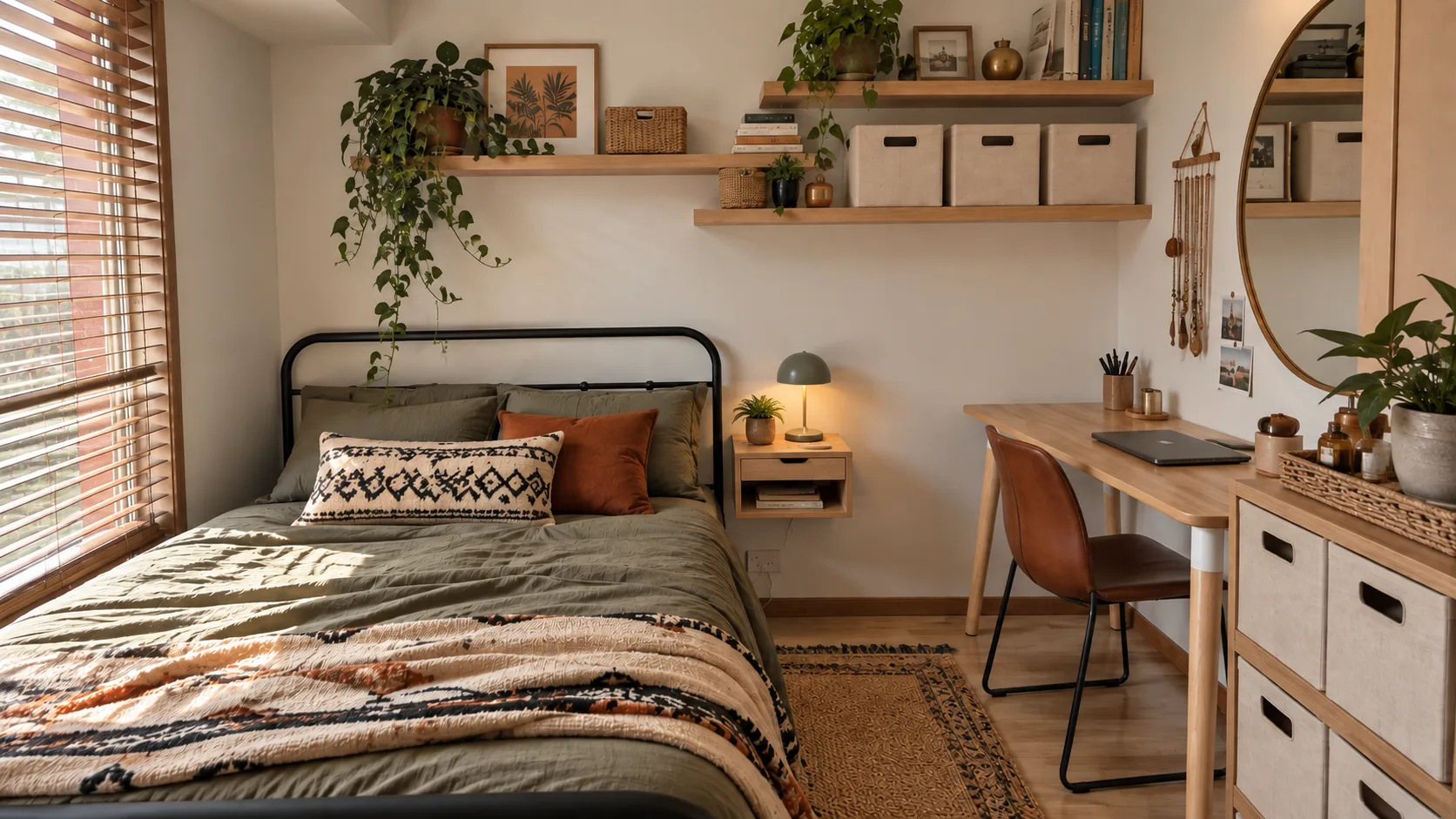
A small bedroom doesn’t have to feel like a box. If yours is starting to close in on you, the good news is that most of what makes a room feel cramped comes down to a handful of fixable choices — color, furniture scale, light, and clutter — not square footage.
Learning how to make a small bedroom look bigger is really about training the eye. When a room reads as open and uncluttered, it feels bigger even if the tape measure says otherwise. Here’s what actually moves the needle, without a single wall coming down.
What Colors Make a Small Bedroom Look Bigger
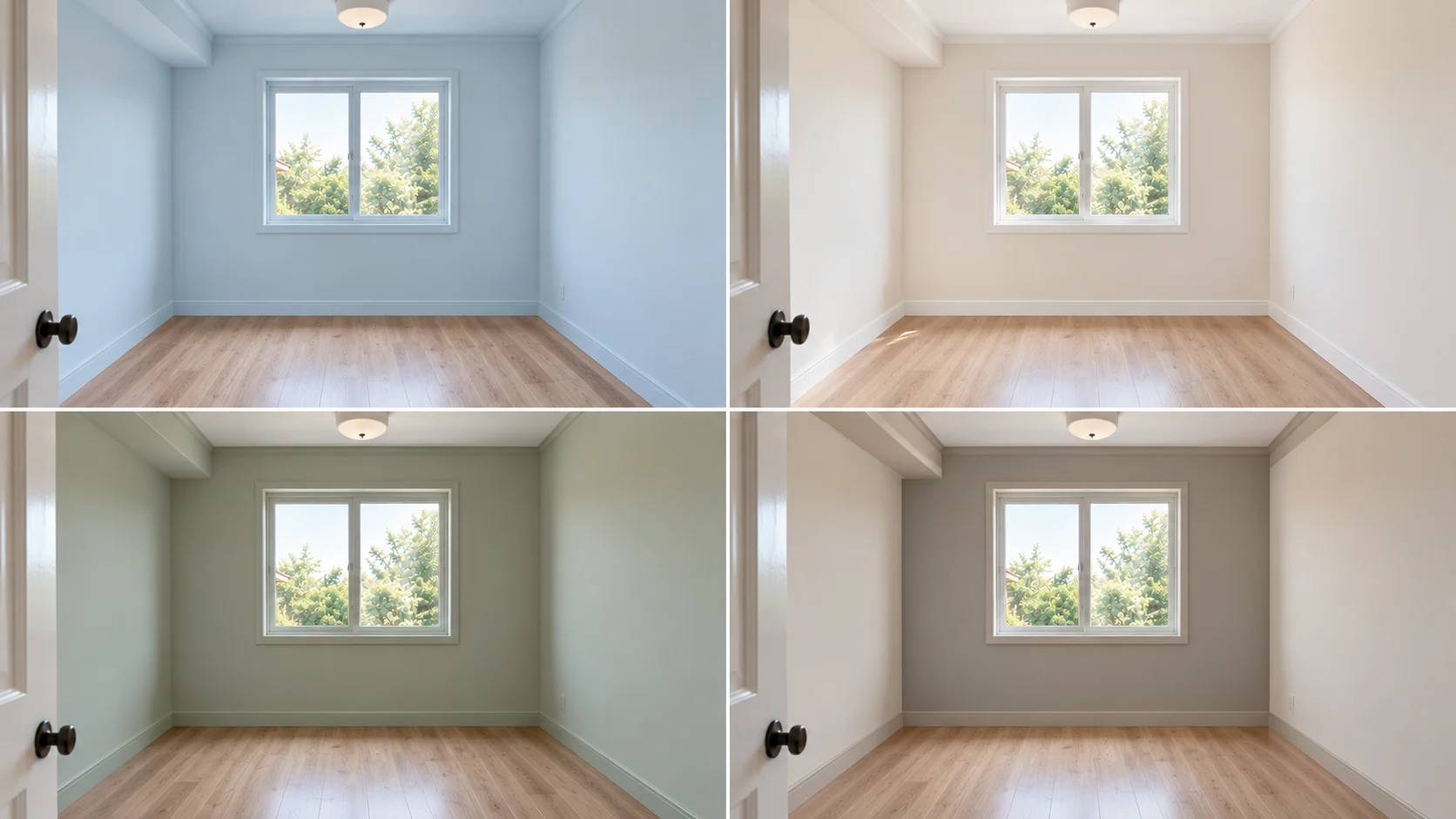
Color sets the tone for how spacious a room feels before anything else in it does. Light, cohesive colors reflect more light and don’t create the visual “stops” that make a small room read as choppy.
Soft whites, warm greiges, and pale, muted tones are the safest bet because they keep the eye moving instead of catching on contrast. That doesn’t mean the room needs to be all-white — a cohesive palette does the same job. The trick is limiting yourself to one main wall color, one soft accent, and maybe one supporting neutral, so nothing competes for attention.
Painting the ceiling the same color as the walls (or a shade lighter) is an easy way to blur where the walls end and the ceiling begins, which can make a low ceiling feel taller. If you want texture without committing to paint, a light, subtle pattern like a peel and stick wallpaper on one wall adds interest without the visual weight of a bold, dark print.
Learning how to make a small bedroom look bigger is really about training the eye. When a room reads as open and uncluttered, it feels bigger even if the tape measure says otherwise. Here’s what actually moves the needle, without a single wall coming down.
Choose Furniture That Fits the Room, Not the Showroom
Oversized furniture is one of the fastest ways to shrink a small bedroom. A bulky bed frame or a deep dresser can eat more visual space than the room can spare, even if it technically fits.
Scale matters more than quantity. A small bedroom can still hold a comfortable bed, storage, and a nightstand — the pieces just need to be sized for the room, not for a big-box showroom floor. Look for clean lines, raised legs, and slimmer profiles that let floor show through; a frame like the metal platform bed frame has open space underneath that keeps the room feeling like it can breathe.
Best Furniture Layouts for Tiny Bedrooms
Before looking for furnitures, measure:
- The wall where the bed will go
- Walking space on the side of the bed
- Door swing clearance
- Distance between the bed and dresser
Positioning the bed first — treating it as the room’s anchor — makes it easier to figure out where everything else goes. If floor space is tight next to the bed, some furnitures you can do would be wall-mounted options, like the floating wall-mount nightstand, which clears the floor entirely while still giving you a spot for a lamp and a glass of water.
Use Mirrors to Add Depth and Light
Mirrors are one of the oldest tricks for making a small bedroom look bigger, and they still work because they do two things at once: bounce light around the room and create the illusion of depth.
One well-placed mirror usually does more than several small ones scattered around. The best spot is across from or near a window, where it can catch natural light and send it back into the room. A leaning full-length option like the full length mirror works well because it adds height without requiring any wall-mounting.
Skip small, fragmented mirror arrangements — they tend to read as clutter rather than open space. Go bigger and use fewer.
How to Make a Small Bedroom Window Look Bigger
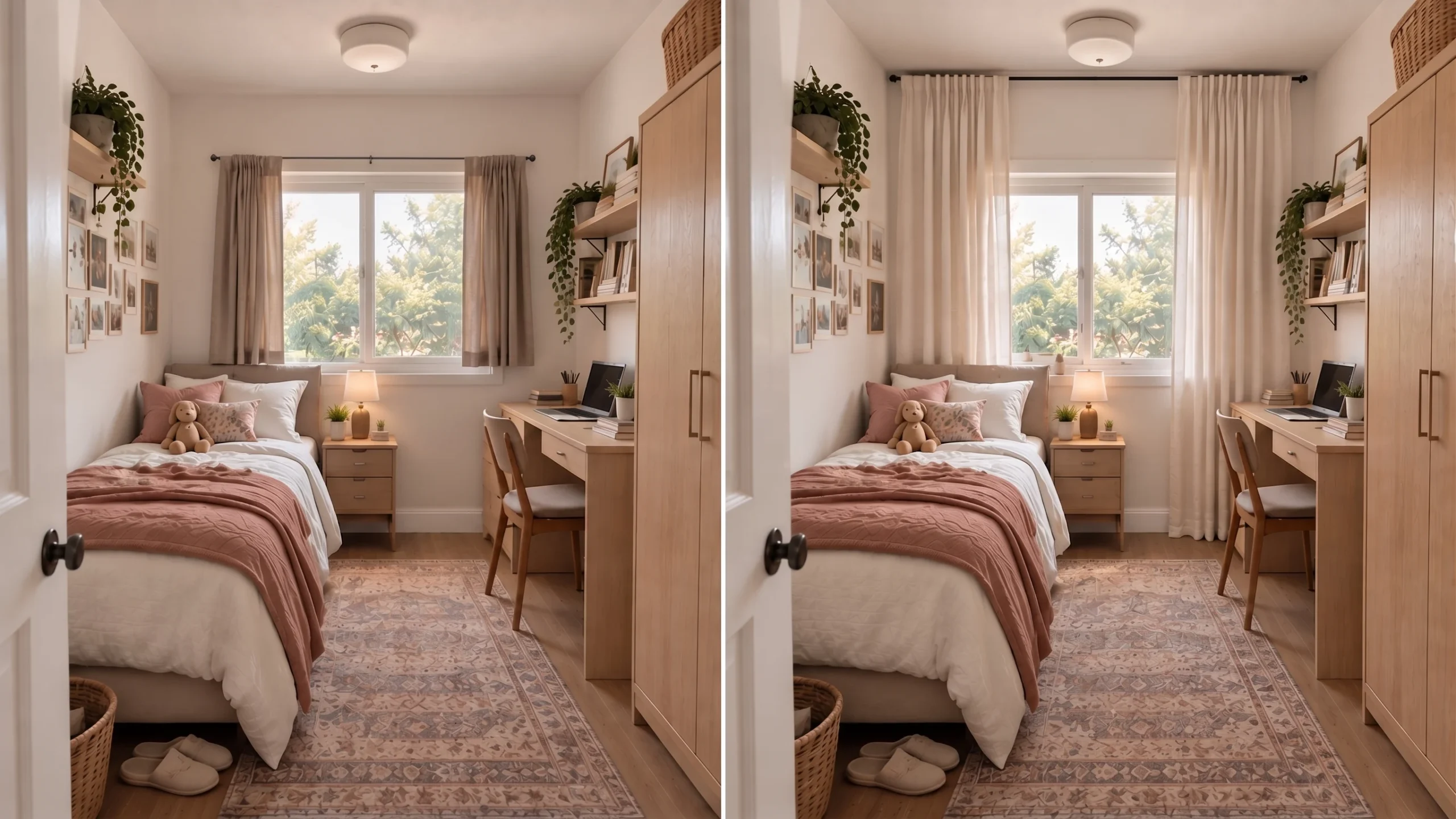
A window can only do so much for a small room if it’s boxed in by heavy drapery or a low-hung curtain rod. The fix starts with the hardware, not the glass.
Hang the curtain rod a few inches higher and wider than the window frame itself — this makes the window appear taller and lets in more light once the curtains are open. Light-filtering fabric, rather than heavy blackout drapes, keeps the window from feeling like a dark rectangle in the wall. Sheer, breathable panels like light-filtering sheer curtains let daylight spread through the room while still softening the view.
Avoid parking a dresser or tall furniture directly in front of the window. A blocked window cuts off light at the source, and no amount of paint or mirror placement fully makes up for that.
Light It Right: Lighting Tricks That Open Up a Small Room
A single overhead fixture almost always leaves dark corners, and dark corners make a small bedroom feel smaller than it is. Layered lighting — a mix of overhead, task, and accent light — does a much better job of making the whole room feel usable.
Wall-mounted sconces are especially useful here because they free up nightstand space while drawing the eye upward, which can make the room feel taller. A plug-in option like the plug-in swing arm wall sconce is an easy way to add reading light beside the bed without giving up surface space to a lamp. Round it out with warm bulbs — anything that skews too cool or bright can flatten the calm, cozy feeling a bedroom is supposed to have. As one design roundup on the same lighting-first approach points out, raising light sources off the floor is one of the simplest ways to create the illusion of extra space.
Vertical Storage and Decluttering Do More Than You'd Think
Floor-based storage is often the real culprit behind a bedroom that feels tight. When everything sits low and wide, the floor feels full; when storage moves upward, the room opens up.
Floating shelves, tall narrow dressers, and closet organizers all use height instead of floor area. A pair of floating wall shelves above a nightstand or desk can hold books and décor without taking up an inch of walkway. For everything that needs to stay out of sight, soft, stackable containers like fabric storage bins tuck into a closet or under the bed far more neatly than loose piles ever will.
Keep it edited. A shelf that’s packed to the edges becomes visual clutter just as fast as a cluttered floor does — the goal is breathing room, not just relocated stuff. House Digest makes a similar case for raising storage off the floor whenever a small bedroom design allows it.
Wallpaper and Pattern: Where Small Spaces Can (and Can't) Go Bold
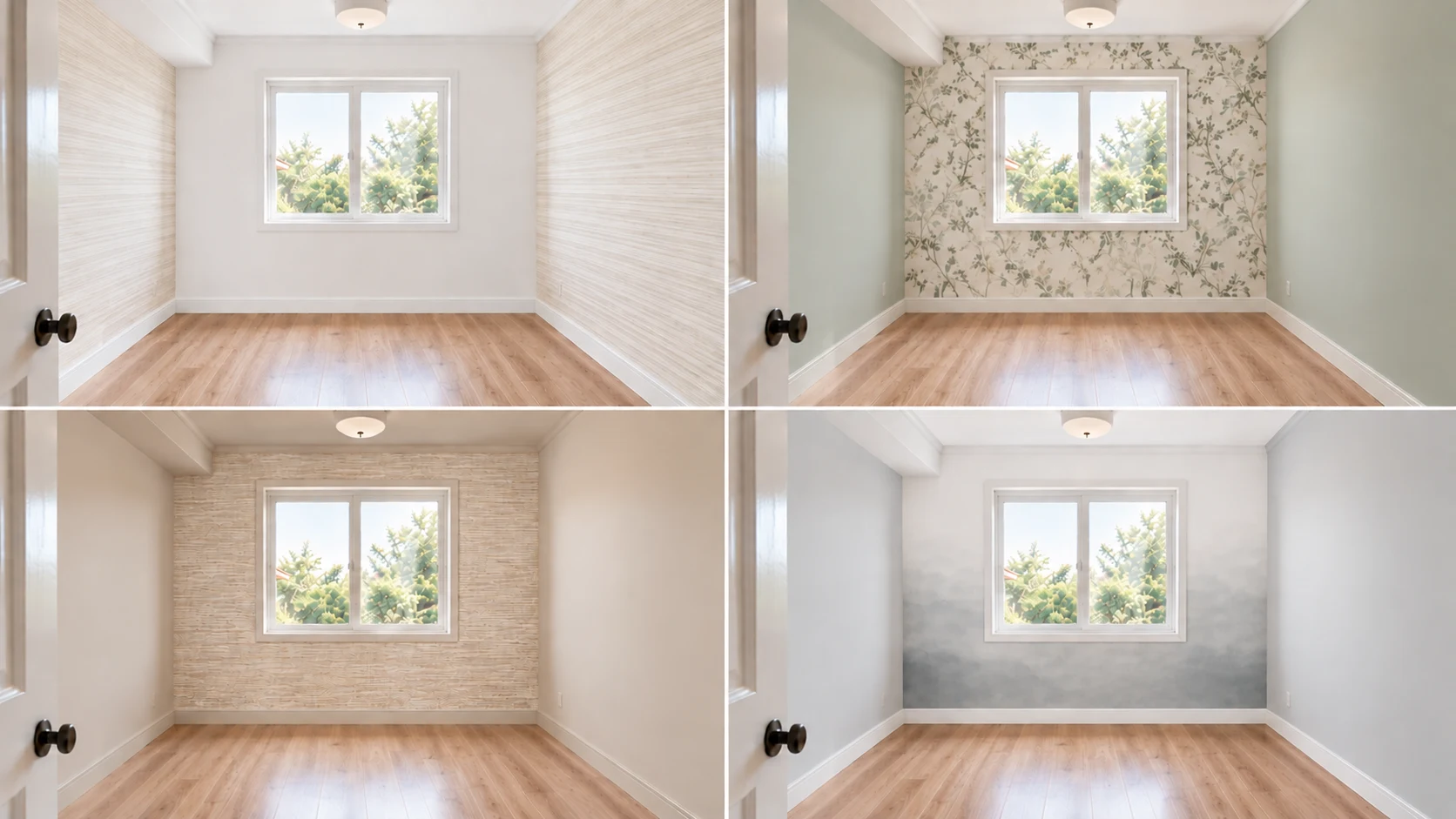
Pattern isn’t off-limits in a small bedroom, but it does need boundaries. A single accent wall in a light, small-scale print equals wide space; pattern on every surface reads as busy, no matter how nice each piece is on its own.
Interior designers point to a handful of patterns that reliably work in a small room’s favor:
- Vertical stripes. Thin, tonal stripes (think cream on off-white rather than high-contrast navy on white) pull the eye upward and make a low ceiling feel taller without adding visual weight.
- Oversized, sparse prints. Counterintuitively, a large-scale botanical or geometric on a light ground can read as more spacious than a tiny busy print — fewer distinct elements per square foot means less for the eye to process.
- Soft, tonal geometrics. Small, monochromatic shapes like faint hexagons or thin chevrons add depth and personality without introducing the contrast that makes walls feel like they’re closing in.
- Light, textured patterns. Grasscloth or subtly raised textures in white or cream catch light across the surface, adding dimension while still keeping the wall visually quiet.
If you’re not ready to commit to a full wall, a single framed panel of pattern does the job with even less risk.
A Small Bedroom, Before and After: What Actually Moves the Needle
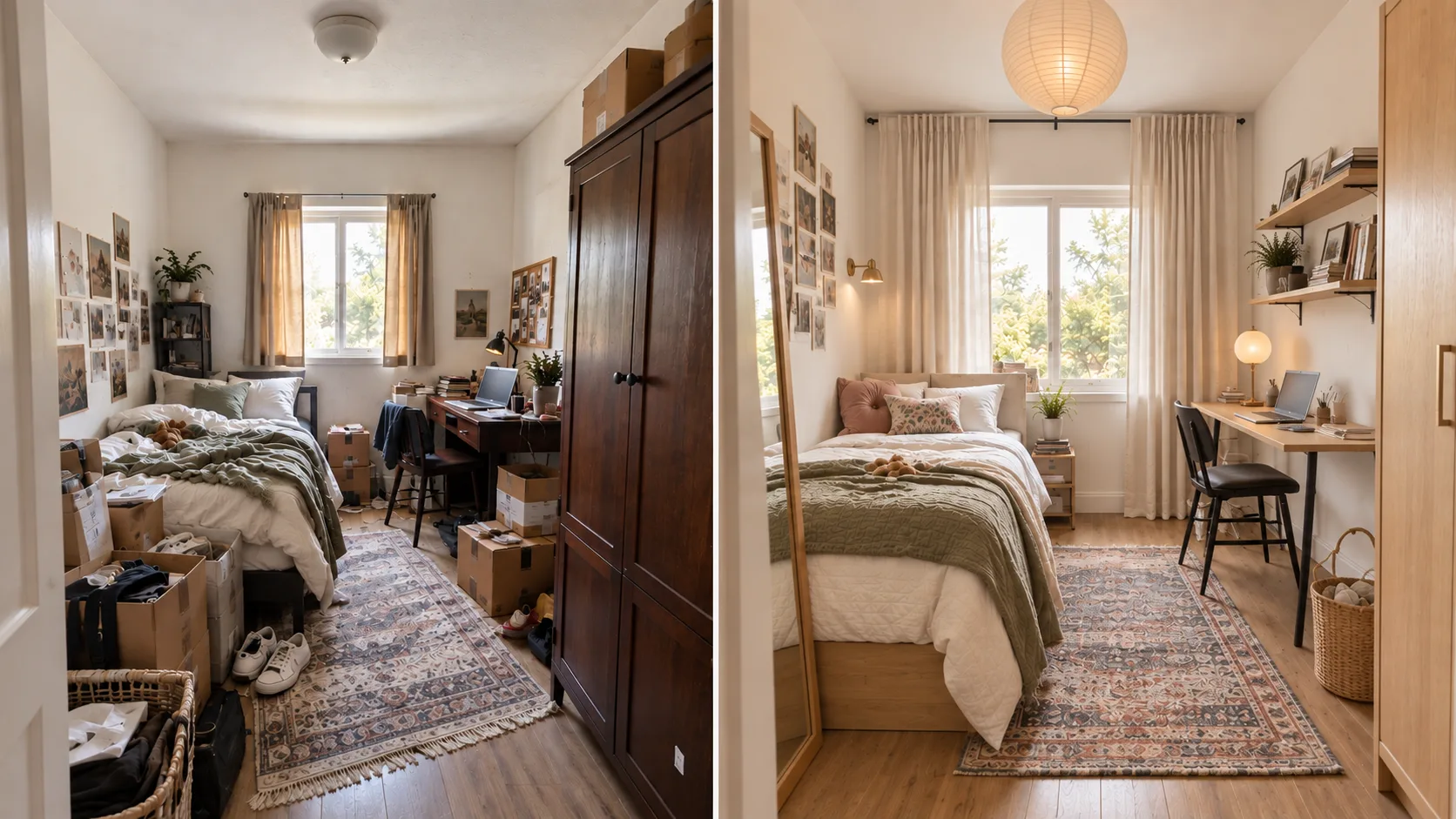
It’s worth being honest about which changes matter most. Paint and decluttering cost the least and tend to make the biggest visible difference in a small bedroom look bigger transformation — before-and-after photos of the same room almost always show a lighter wall color and a cleared floor as the two biggest factors.
Furniture swaps and lighting upgrades matter too, but they work best layered on top of a room that’s already been decluttered and organized. Start with what you can paint or remove before you start shopping for anything new.
According to design coverage from The Spruce, designers consistently point to a light, cohesive color palette as the single highest-impact change in a small bedroom — which tracks with just about everything above.
Frequently Asked Questions (FAQs)
What's the fastest way to make a small bedroom look bigger?
Decluttering surfaces and switching to a lighter, more cohesive paint color are usually the quickest wins. Both are low-cost changes that show up immediately in how open the room feels, even before any furniture changes.
Do light colors really make a bedroom look bigger?
Yes — light, reflective colors bounce more available light around the room and avoid the sharp contrast that makes a space feel visually chopped up. A cohesive palette across walls, ceiling, and trim tends to work better than stark white paired with dark accents.
How many mirrors does a small bedroom need to look bigger?
One well-placed, appropriately sized mirror usually does more than several small ones. Position it near or across from a window so it reflects natural light back into the room instead of just doubling a dark corner.
- All Posts
- Aesthetic Lovers
- Cozy Foundations
- Great Finds
- Home Chefs
- Intentional Parents
- Pet Lovers
- Productivity Seekers
- Room Inspirations
- Smart Finds