You’ve moved your couch three times. You’ve stood in the spot next to it, mentally placing an imaginary table there, then taken a picture and zoomed in like that’s going to tell you anything. You’ve opened twelve tabs of “side tables” on four different stores, and you still don’t know if you need one table or two, whether round is “too predictable,” or if that gorgeous marble one is going to look ridiculous next to your slightly-too-big sofa. If that’s you — welcome.
Side tables are just deceptively tricky: they’re small enough that it feels like they shouldn’t matter, and yet somehow the wrong one makes a whole corner of your living room feel off in a way you can’t quite explain.
Here’s the good news: choosing one stops being confusing the second you know what to actually look at — just four practical things, in order. Get those right, and the “does this look cozy for my space or did I just grab whatever” feeling disappears. By the end of this guide, you’ll know exactly what your ideal side table should look like, down to the inches.
Quick Clarification: Side Table vs. End Table
You’ll see these two terms everywhere, often describing the exact same product. Technically, an end table sits at the end of a sofa and is built for easy reach — a lamp, a mug, a book. A side table is the broader term: it can do everything an end table does, but it’s also welcome beside a chair, in a hallway, in a reading nook, or as a nightstand.
The 4 Things That Actually Matter
Before you fall in love with a finish or a shape, run any candidate table through these:
- Height — does it match what it’s sitting next to?
- Size & shape — does it fit the room and the traffic flow?
- Material — does it match how you’ll actually use it?
- Storage — do you need it to hide anything, or just hold things?
That’s it. Everything else — wood vs. metal, round vs. square, one table vs. two — is just a variation on these four. Let’s go through them one at a time.
Start With Height — It Matters More Than Anything Else
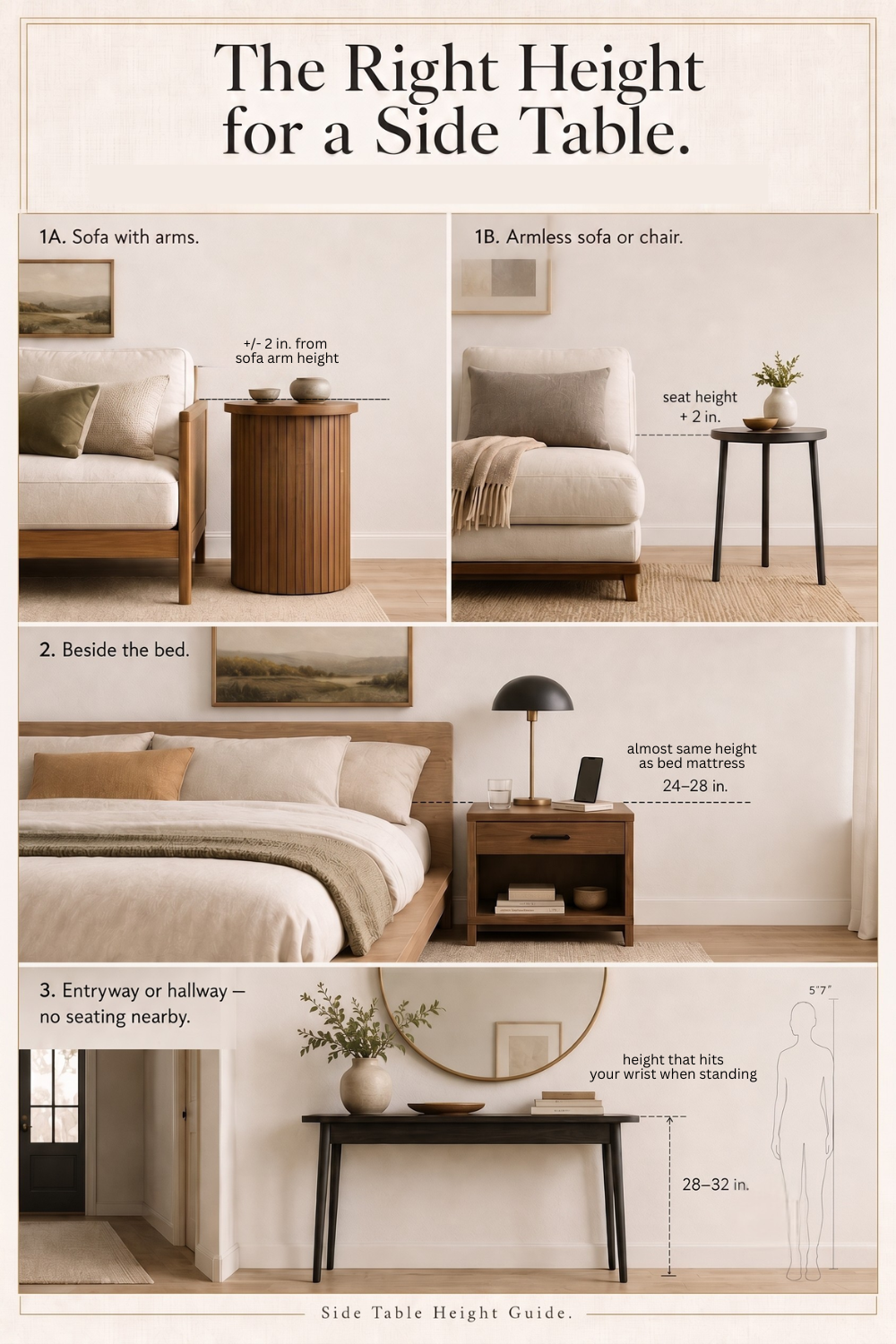
If you only remember one rule from this whole guide, make it this one: a side table should be roughly the same height as whatever it’s sitting next to — same height, or up to an inch or two lower. Never much taller.
A table that’s too tall makes you lift your arm awkwardly every time you set down a drink. A table that’s too short means you’re leaning and reaching. Either way, you’ll notice it every single day — which is exactly why “I don’t know what’s wrong with this corner” is so often actually a height problem in disguise.
Next to a Sofa or Armchair
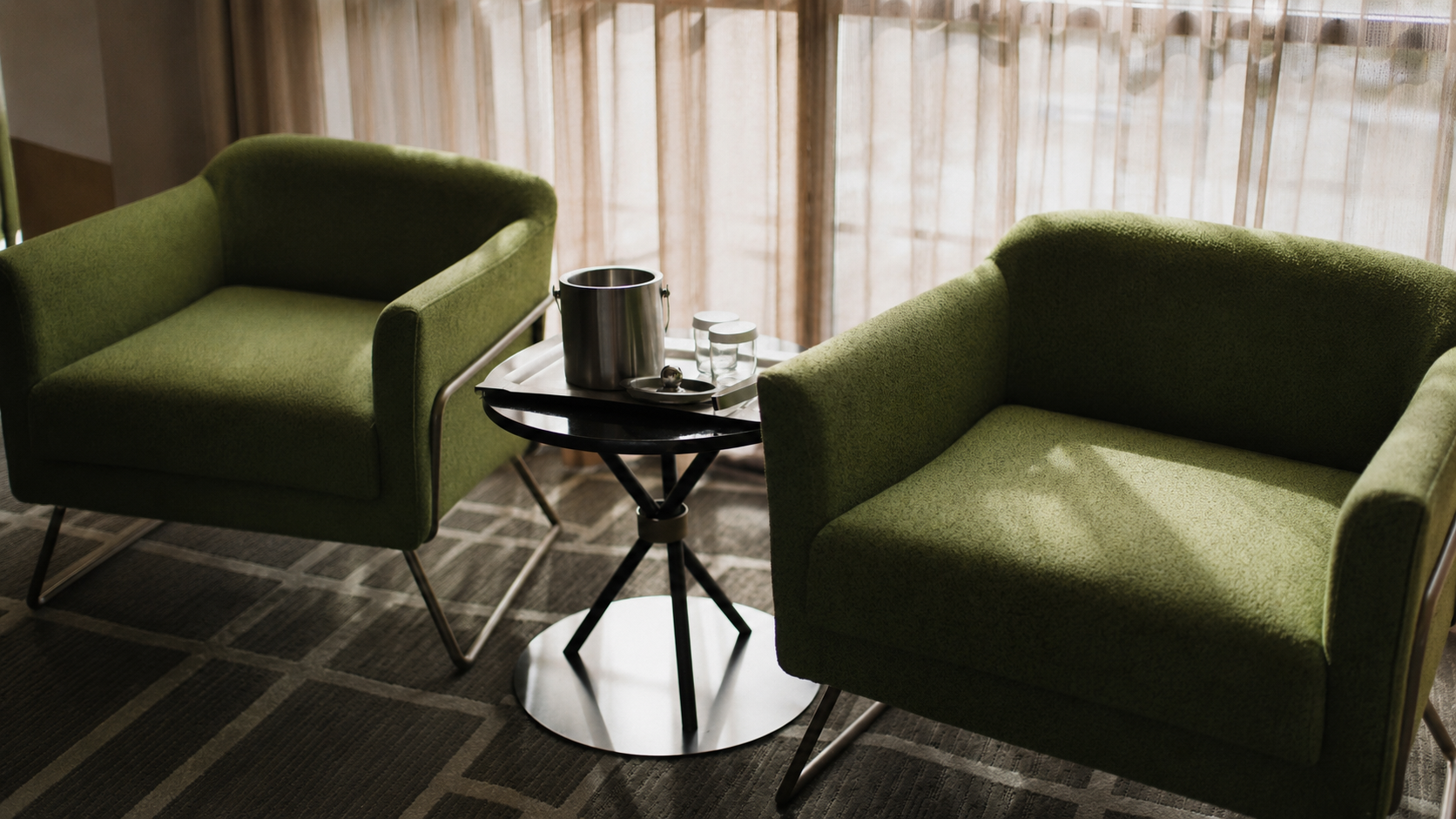
Most sofa arms sit around 24 inches off the floor, so aim for a side table in the 22–26 inch range — same height as the arm, or up to 2 inches lower. If your sofa or chair is armless, use the sofa seat height instead, plus a 2 inches.
Beside the Bed
For a side table doing double duty as a nightstand, match it to roughly the height of your mattress top — usually 24–28 inches. You want to be able to reach your phone or a glass of water without sitting all the way up.
In an Entryway or Hallway
Here the table isn’t next to seating, so the rule changes: go for a standard table height of 28–32 inches, roughly the height that hits your wrist when you’re standing. This is also where a slightly more decorative, statement-making table can shine, since no one’s reaching for it from a seated position.
Size & Shape: Matching the Table to Your Room
Once height is sorted, size and shape are about fit — both physically and visually.
Round, Square, or Rectangular?
- Round or oval tables are the safest choice in almost any room. They soften a space that’s otherwise full of straight lines (sofa, coffee table, rug edges), and the lack of corners means you won’t catch a hip on them walking by — especially useful if the table sits somewhere you turn a corner often.
- Square tables give you a clean, structured look and nestle neatly into the gap between two chairs or at the end of a sofa without jutting out.
- Rectangular tables offer the most surface area, which is great if you’re someone who actually uses the table — books, a tray, a lamp, your laptop charger — rather than just decorating it.
How Big Is Too Big (or Too Small)?
A table under 18 inches wide starts to feel more decorative than useful — fine for a small plant or a single candle, less fine if you actually want to set a drink down. For a table that earns its keep, aim for at least 18–22 inches across. If you’re planning to put a lamp on it, give yourself a little more room — closer to 22–24 inches — so the lamp doesn’t dominate the whole surface.
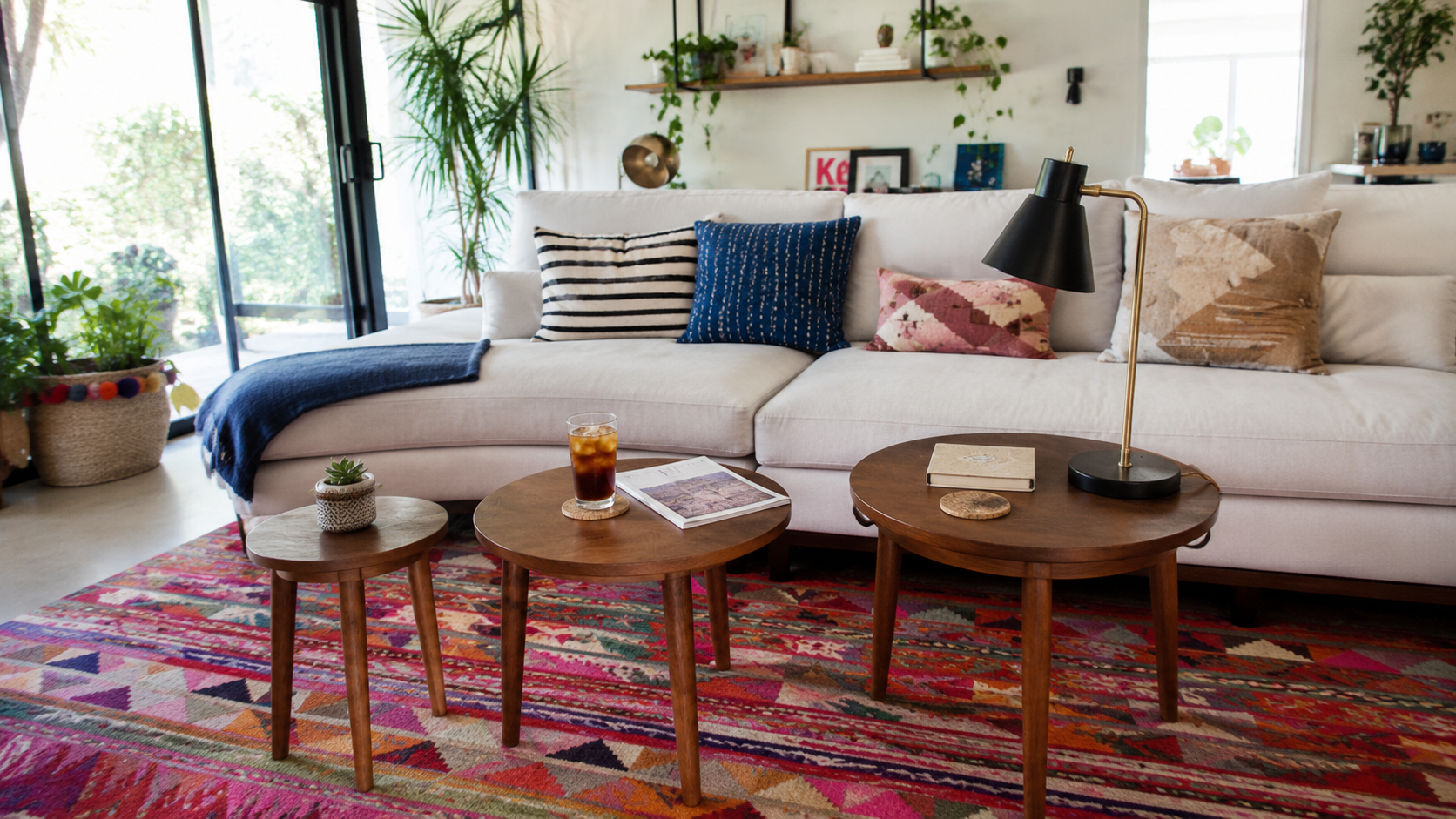
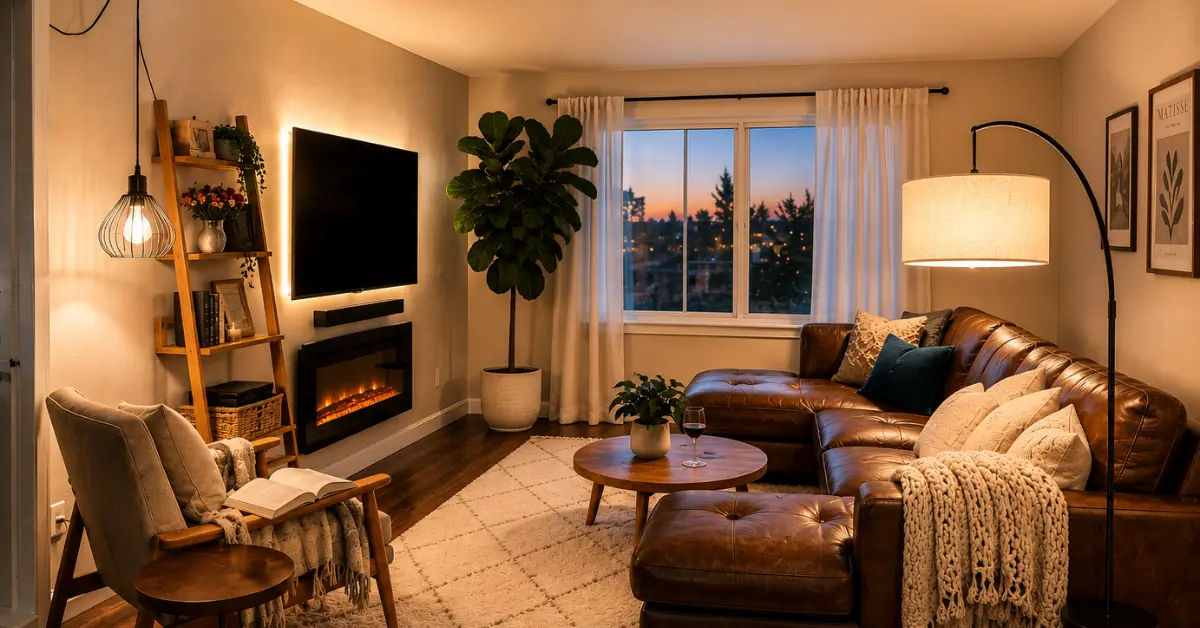
And if you’ve been going back and forth between a coffee table and a set of nesting side tables for a small living room: nesting tables are the flexible choice. They tuck away when you need floor space and pull apart when you’re hosting or just want a surface on each side of the sofa — a genuinely good option if your room has to work harder than a bigger space would.
Material & Storage: What Fits Your Daily Life
This is where personality starts to show up — but it’s worth choosing with function in mind first, style second.
Wood, Metal, Glass, Marble, Rattan
- Wood brings warmth and works almost everywhere — it’s the safest “won’t regret it” choice, especially in Cottagecore, Scandinavian, or Boho-leaning rooms.
- Metal reads more modern or industrial, and pairs beautifully against a wood coffee table for a bit of contrast rather than matching everything.
- Glass keeps a small room feeling open and airy, since it doesn’t visually “take up” floor space the way solid materials do.
- Marble or stone tops feel elevated and are genuinely practical — no coasters required, since they handle condensation rings far better than wood.
- Rattan or cane brings texture without visual weight, a favorite in Boho and coastal spaces.
If you’re drawn to boho layering, clean modern lines, soft minimalism, romantic shabby chic details, or a bit of Y2K personality, we’ve curated side table picks for every style to help you find the one that feels less like a piece of furniture and more like it was made for your space.
Do You Need a Drawer or Shelf?
Be honest about how the table will actually get used. If remotes, chargers, and “stuff that needs to disappear” tend to pile up near your seating, a table with a drawer will save you from clutter creep. If you’re more likely to display books or a small plant, an open shelf adds storage without hiding it. And if the table’s job is purely decorative — holding a lamp, nothing else — skip storage altogether and let the design be simpler.
Styling It So It Looks Pulled-Together
Once you’ve got the right table, styling it is genuinely simple — it just needs a formula, not inspiration:
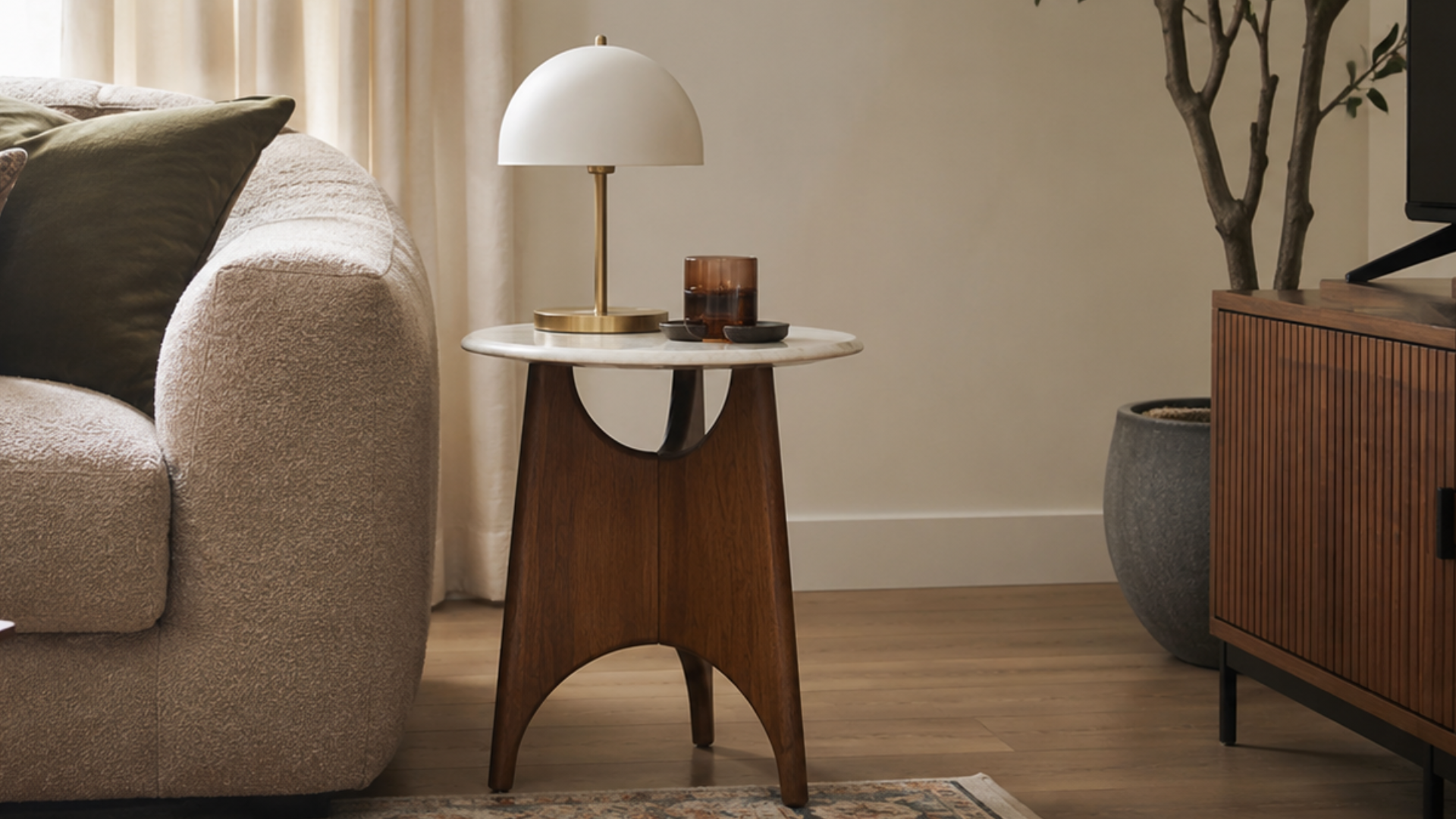
One lamp (or light source) + one small decorative object + one natural element.
That’s a table lamp, a little stack of books or a small ceramic dish, and a plant or a vase of stems. Three things, never more. The instinct to add a fourth or fifth item is exactly what tips a side table from “styled” into “cluttered” — less is doing more work here than it looks like.
Beyond the Sofa: Where Else a Side Table Can Work
Once you start thinking in terms of height, size, material, and storage, a side table stops being “that thing next to the couch” and becomes one of the most flexible pieces you own:
- Beside an accent chair in a reading corner, sized to hold a lamp and your current book
- As a nightstand, when a true bedside table feels too bulky or boxy for the room
- In a hallway or entryway, where a taller, more decorative table can hold keys, mail, or a small lamp
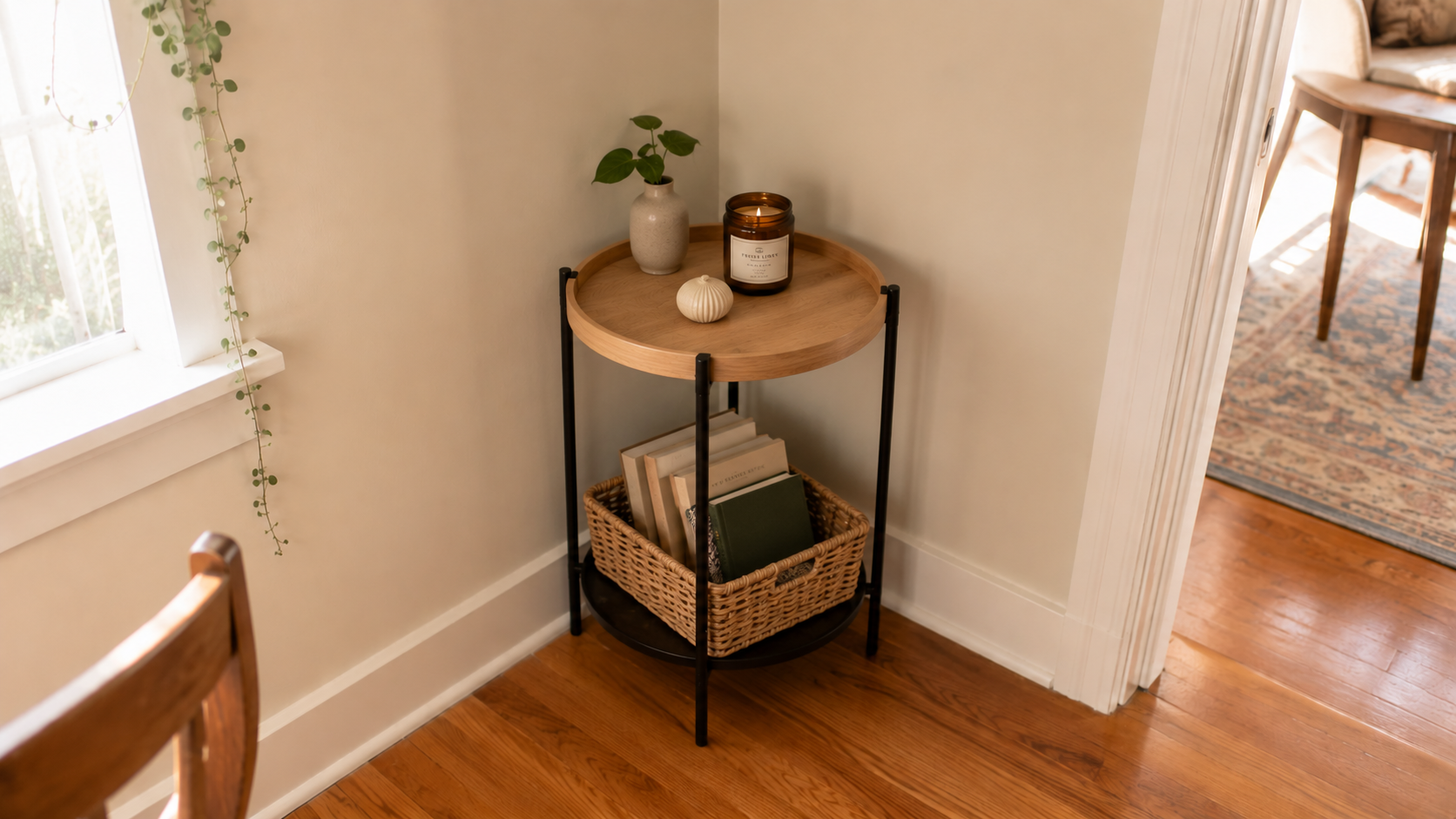
- Filling an awkward corner that’s too small for real furniture but too empty to ignore
- As a plant stand, letting a side table double as a perch for something green and growing
Now That You Know What to Look For
You came into this not sure where to even start — and now you know exactly what to check before you buy: height that matches your seating, a size that fits your space without crowding it, a material that suits how you live, and storage only if you actually need it. That’s the whole decision, stripped of the overwhelm.
- All Posts
- Aesthetic Lovers
- Home Chefs
- Intentional Parents
- Pet Lovers
- Productivity Seekers
- Smart Finds