You don’t lose the day at 3 PM when your focus crashes. You lose it at 6:47 AM — the moment you hit snooze for the third time, reach for your phone, and surrender control of your first conscious hour to the algorithm.
Here’s the uncomfortable truth: most productivity systems fail not because the strategies are wrong, but because they start too late. The first hour of your day is already gone simply because it’s hijacked by inertia, cortisol-depleting stress, and reactive thinking. And when that first hour slips, the effects compound. You start the day behind, which forces you into reactive mode. Instead of choosing your priorities, you respond to notifications. Instead of building momentum, you chase urgency. By mid-morning, you’re already mentally scattered, and the work that actually matters gets pushed further down the list. Over time, this pattern doesn’t just waste mornings, but it erodes confidence, increases stress, and reinforces the belief that you’re “bad at mornings,” when in reality, your system is broken.
So this guide is for people who are serious about winning the first hour of your day — not just surviving it.

Here’s how to build your morning that actually works.
1. How to Wake Up Early and Make Waking Up Non-Negotiable
Momentum starts the moment your alarm rings.
Stop Hitting Snooze to Beat Sleep Inertia
Sleep research consistently shows that repeated snoozing fragments your sleep cycle and can worsen sleep inertia – that foggy, disoriented feeling that makes you feel “off” for the next hour.
If you’re someone who sleeps through gentle alarms or negotiates with yourself every five minutes, you don’t need more discipline. You need friction in your favor.
Morning Routine Tips for Heavy Sleepers
This is where a loud alarm clock for heavy sleepers changes the game. A high-decibel alarm or a vibrating bed shaker forces a physical response. Some even require you to stand up or complete a task to turn them off.
This here is practical, because the fastest way to lose the first hour of your day is to not fully starting it right.
2. Start Your Day Right: Why You Must Avoid Your Phone
Your phone is a slot machine disguised as a productivity tool.
The moment you open it, you invite in other people’s priorities: emails, messages, headlines, algorithm-curated chaos.
Neurologically, that early dopamine hit from scrolling makes slower, meaningful work feel harder by comparison. You’re training your brain to crave stimulation before intention.
Create a Mindful Morning Routine with a “No-Phone Buffer”
Instead, create a “no-phone buffer” after waking up. Even 20 to 30 minutes is enough.
If you need something to anchor your attention but hate the suddenness of a loud alarm, a sunrise alarm clock with natural light simulation can help you wake more gradually without defaulting to your screen. Light exposure early in the day also supports your circadian rhythm and helps regulate alertness, which will help maintain focus on tasks throughout the day.
3. Healthy Morning Habits: Hydrate Before You Caffeinate
After 6 to 8 hours of sleep, your body is mildly dehydrated. Even small levels of dehydration can affect cognitive performance, mood, and energy.
So before coffee, before pre-workout smoothies, before anything – drink water.
Use Visual Cues to Ensure Daily Habits Stick
A large water bottle with time markers makes this easier than it sounds. Keep it beside your bed or in your kitchen as a visual cue. If it’s already filled the night before, you remove one more decision from the morning.
Hydration improves circulation, helps your brain “wake up,” and reduces the sluggishness that often gets mistaken for lack of motivation.
4. Move — But Keep It Simple
You don’t need a 60-minute workout to win your morning. But you do need movement.
Improving Productivity with a Quick Morning Workout
Researches consistently show that even short bouts of light exercise increase alertness, improve mood, and enhance executive function (the mental skills you rely on for planning and focus).
Think 5 to 10 minutes – stretching, push-ups, squat, a brisk walk.
Before working, have a compact home workout kit with resistance bands nearby to remove excuses. Movement signals to your brain: we are active now, and that signal carries into your work day.
5. Plan Your Day: Decide the Day Before the Day Decides You
One of the biggest reasons people lose their first hour?
They don’t know what to work on, so they default to email or Slack… or whatever feels urgent.
Set Intentions for the Day with a Productive To-Do List
High performers don’t start their day by choosing tasks. They start by executing decisions already made.
So before you end your workday, identify your “first win” for tomorrow — the one task that, if completed early, would make the day feel productive. Write it down, better physically.
If it’s not too much, a minimalist daily planner for productivity makes this tangible. Physically writing tomorrow’s priority reduces decision fatigue in the morning and increases follow-through, so that when you wake up, there’s no debate. You simply begin.
6. How to Be Productive in the Morning: Protect Your First Hour
The first 30 to 60 minutes of focused work often produce disproportionately high output.
Why?
Because your cognitive resources are highest before you’ve made dozens of micro decisions or tasks. This is the time for deep work.
Deep Work Rituals of Successful People
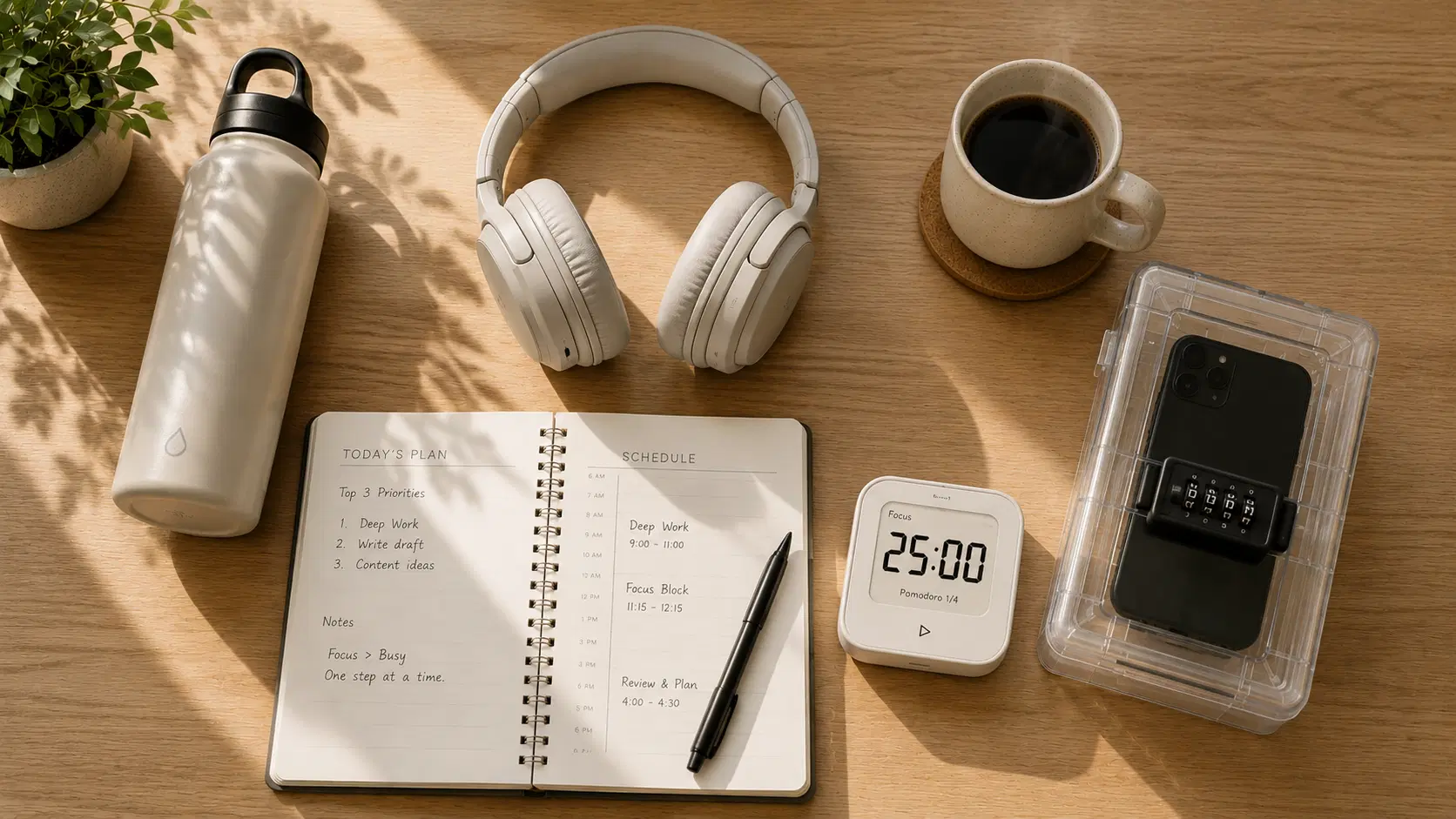
If noise or distractions derail you, a pair of noise-canceling headphones for focus can dramatically reduce cognitive interruptions. Even subtle background noise increases mental fatigue over time.
Create a small habit:
- Sit down.
- Start a timer (25 to 60 minutes).
- Work on only the priority you selected yesterday.
No checking notification. No switching to micro tasks. Finish one meaningful block of deep work before moving on.
7. Creating an Intentional Environment for Productivity
Your environment is either draining you or supporting you.
Exposure to bright light early in the day improves alertness and sets your internal clock. Natural light is best. Step outside if you can — even for five minutes.
If that’s not realistic, position your workspace near a window. Reduce clutter. Remove visual distractions. Winning the first hour isn’t about a Pinterest-perfect desk. It’s about reducing friction. When your space is calm, your brain follows.
8. Stop Trying to Build a Perfect Morning Routine
This is where most productivity advice goes wrong.
You don’t need:
- Ice baths
- 10-step skincare rituals
- 45-minute meditation sessions
- Elaborate journaling prompts
You need consistency – a repeatable sequence that works on your worst day, not just your best one.
A Simple, Consistent Morning Routine for Productivity
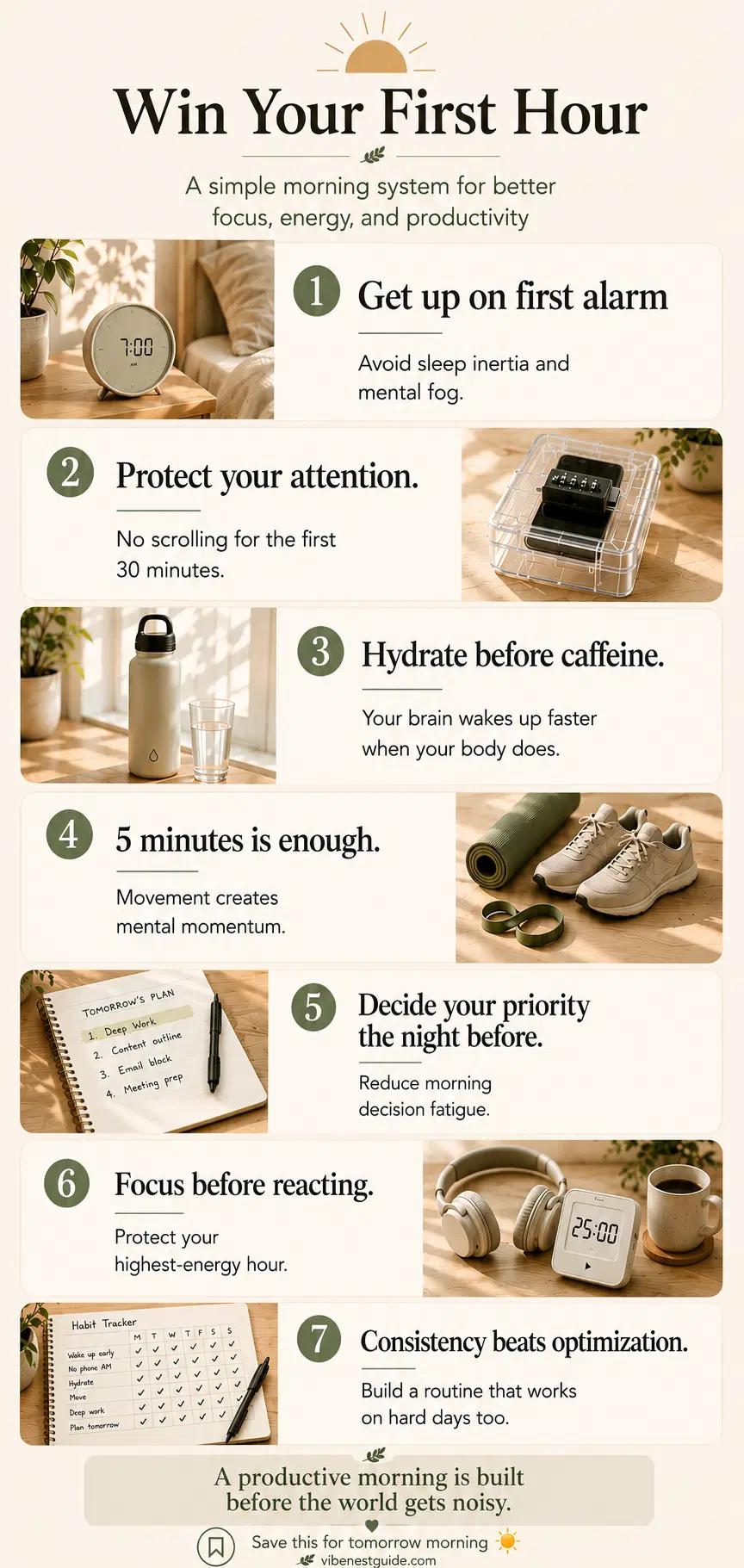
For most people, a strong first hour looks like:
- Wake up on time (no snooze).
- Hydrate.
- Light movement.
- No phone.
- Execute the first priority.
That’s it.
9. Track Your Wins and Morning Ritual Progress
There’s a psychological reason winning the first hour matters: it creates evidence.
When you complete a meaningful task before 9:00 AM, you build internal proof that you are disciplined, capable, and proactive, and that identity reinforcement matters.
Strengthening Daily Habits Through Consistency
If you want to amplify this effect, track your “morning wins” for 30 days in a simple visible checklist.
Small streaks create momentum. Momentum creates confidence. Confidence sustains behavior.
10. Final Thoughts: Your Morning Routine is a Leverage Point
You can’t control:
- Surprise emails
- Traffic
- Other people’s moods
- Random disruptions
But you can control your first hour. And because it happens before most external demands hit, it has important leverage.
If you win it, the rest of the day bends slightly in your favor. If you lose it, you spend hours trying to recover.
Winning the First Hour of Your Day is less about waking up early and more about eliminating friction to have a strong start.
And tomorrow morning is another opportunity for winning your day.
Frequently Asked Questions (FAQs):
1. Do I really need to wake up at 5am to have a productive morning?
No — the most important factor is having enough time before your day’s demands kick in, not the specific hour on the clock. What matters far more than waking up at 5am is waking up consistently at the same time each day and protecting those first hours from reactive tasks like checking email or social media.
2. Why do I feel unproductive in the morning even after a full night’s sleep?
The most common culprit is jumping straight into your phone, which immediately pulls your attention into other people’s priorities and fragments your focus before the day has even begun. Another overlooked reason is dehydration — after several hours without water, even mild dehydration can noticeably dull mental clarity and energy, so drinking water before anything else makes a real difference.
3. What is the single most important habit to start a productive morning?
If you can only change one thing, plan the night before — specifically, write down your two or three most important tasks for the next day before you go to sleep. This removes the mental fog of figuring out what to do when you wake up and lets you start moving with clarity and direction the moment your feet hit the floor.
- All Posts
- Aesthetic Lovers
- Home Chefs
- Intentional Parents
- Pet Lovers
- Productivity Seekers
- Smart Finds