
Living with your dog or cat means accepting one universal truth: fur will appear everywhere.
On your sofa. On freshly washed clothes. On the stairs. Somehow even inside cabinets you swear were closed.
Shedding isn’t a flaw, but a biological process. But when it feels like your home is permanently dusted in fur, it can become frustrating fast.
Here’s the good news: reducing pet hair isn’t about cleaning more aggressively. It’s about being strategic. When you address shedding at the source and support it with the right home systems, the amount of visible hair drops dramatically.
Veterinary professionals and experienced groomers consistently point to three levers that matter most:
- Consistent grooming
- Proper nutrition and hydration
- Smart capture tools for your home
When these work together, managing pet hair becomes routine, not overwhelming. This guide walks you through exactly how to do that.
Reduce Shedding at the Source: Dog Grooming to Reduce Shedding
The most efficient way to reduce pet hair in your home is simple:
Hair that ends up in your brush never lands on your furniture.
Brushing as the Highest-Impact Habit During Shedding Season
Regular brushing intercepts loose fur before it spreads. During seasonal shedding periods, especially spring and fall, this habit becomes even more important, particularly for double-coated breeds like Huskies, Golden Retrievers, and German Shepherds.
For most pets, brushing once or twice weekly works as maintenance. During heavy shedding seasons, daily brushing can dramatically reduce the volume of fur circulating indoors.
Choosing the Best Pet Hair Removal Tools for Your Pet’s Coat
The key is using the right tool for your pet’s coat type.
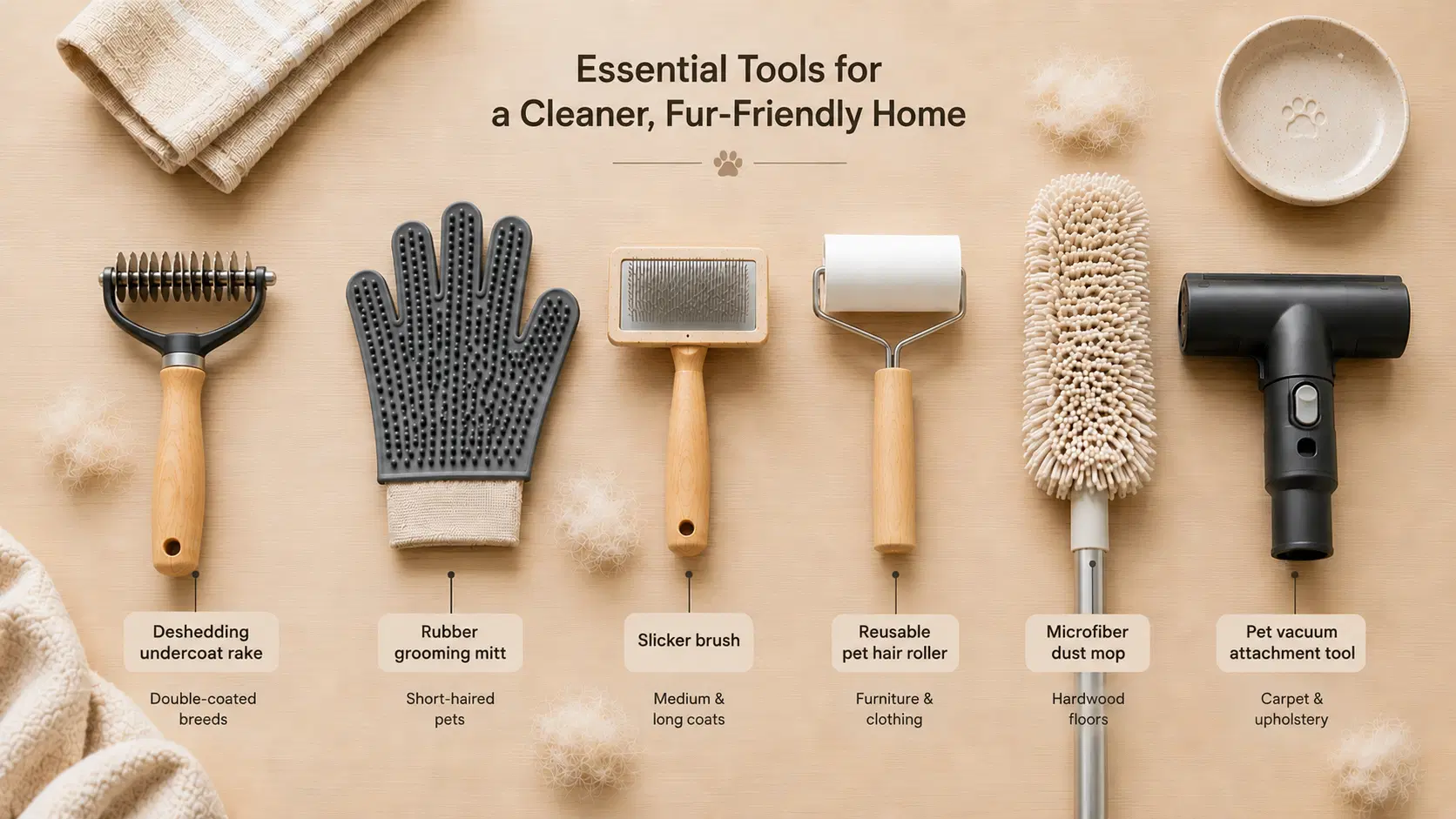
- Deshedding undercoat rake — ideal for double-coated breeds. It reaches beneath the top layer to remove loose undercoat before it releases into your home.
- Rubber grooming mitt— excellent for short-haired dogs and cats. It collects loose hair while feeling like a gentle massage, which helps with pets that dislike traditional brushes.
- Slicker brush — effective for medium-to-long coats, lifting dead hair and smoothing the topcoat at the same time.
A practical tip: brush outdoors whenever possible. Hair released into your yard never enters your cleaning cycle.
Practicing this small habit will reduce the overwhelm.
Bathing Strategy: How to Reduce Pet Shedding with Targeted Shampoos
Bathing does more than remove dirt. Warm water helps loosen detached hair so it can be removed during the drying and brushing process.
Most dogs benefit from a bath every four to eight weeks, depending on coat type and activity level. Always follow with a thorough brushing session once the coat is fully dry — this is when a significant amount of loosened fur releases.
And this is where many pet owners miss an opportunity, which is in the choice selection – a basic shampoo cleans, but targeted formula supports coat health.
A de-shedding shampoo and conditioner with omega-3 fatty acids helps nourish skin and follicles. Dry, irritated skin contributes to excess shedding. When the skin barrier improves, shedding often becomes more controlled over time.
Always use pet-specific, pH-balanced products. Human shampoos can disrupt a dog’s skin chemistry and increase irritation, which can actually worsen shedding.
Support the Coat From Within: Nutrition to Prevent Fur Loss
Shedding isn’t just external. It often reflects internal health, and one of the most overlooked ways to reduce pet hair at home is improving coat nutrition.
Omega-3 and omega-6 fatty acids support skin integrity and promote stronger hair growth. When the skin is healthy, hair sheds more normally instead of excessively. Fish-based diets are particularly beneficial because of their natural fatty acid content. If changing your pet’s primary food isn’t realistic, supplementation is an option. An omega-3 fish oil supplement for pets added daily can support coat health over time. Always consult your veterinarian before introducing supplements, especially for pets with existing medical conditions.
Hydration and Its Role in Maintaining a Hair-Free Home
Hydration also plays a quiet but important role. Mild dehydration contributes to dry skin, which increases flaking and shedding. A pet water fountain can encourage greater water intake, especially for cats and reluctant drinkers. Moving water tends to attract pets more effectively than a stagnant bowl, improving hydration and indirectly supporting coat quality.
Nutrition doesn’t change shedding overnight, but over several weeks, the improvement is noticeable.
Capture What Does Shed
Even with excellent grooming and nutrition, some shedding is normal. The goal shifts from prevention to capture. Your cleaning tools determine whether hair is removed efficiently, or simply redistributed.
Choosing the Best Vacuum for Pet Hair and Carpet Fibers
The foundation of any pet-friendly home is a vacuum with a dedicated pet hair attachment and HEPA filter. Standard vacuums often struggle with embedded fur in carpet and upholstery. Pet-specific brush heads and motorized rollers lift hair from fibers instead of gliding over them. HEPA filtration adds another layer of benefit by trapping fine dander particles rather than recirculating them back into the air.
Simple Hacks to Remove Pet Hair from Furniture and Upholstery
For furniture maintenance, convenience is everything. A reusable pet hair roller or rubber brush kept within reach makes quick daily cleanups effortless. Two minutes per day prevents visible buildup.
How to Remove Pet Hair from Hardwood Floors and Rugs
On hard floors, a microfiber dust mop works better than a traditional broom. Instead of scattering fine hair into the air, microfiber attracts and holds it until disposal.
On carpets, vacuum in multiple directions, against and with the pile, to release trapped fur.
And as always, consistency beats intensity.
Address the Air: Managing Pet Hair and Dander
Pet hair isn’t just what you see. Dander and fine hair particles circulate through indoor air and settle repeatedly on surfaces. This is why a home can feel persistently dusty even after cleaning.
A properly sized HEPA air purifier continuously captures airborne dander and microscopic hair particles. Placing it in the room where your pet spends the most time yields the best results.
Running it at a consistent low setting is more effective than occasional high-speed bursts. Steady filtration reduces overall particle load. Additionally, replace HVAC filters more frequently in pet households — typically every 30–45 days. Clogged filters reduce airflow efficiency and allow dander to recirculate.
Protect Surfaces Strategically for a Fur-Free Home
Instead of constantly removing embedded hair, make it easier to contain. Washable barriers are one of the simplest long-term strategies.
Managing Pet Hair in Laundry and on Clothes
Washable furniture covers or pet throws placed on favorite resting spots collect the majority of shed hair in one removable layer. Instead of deep-cleaning upholstery weekly, you wash or shake out a cover.
For pet bedding, choose pet beds with removable machine-washable covers. Weekly washing prevents buildup of concentrated hair and dander that redistributes into your home.
These small systems reduce total cleaning time dramatically.
When Shedding May Be a Health Issue: Consulting a Professional
Normal shedding follows predictable patterns.
If you notice:
- Patchy hair loss
- Skin redness or irritation
- Increased scratching
- Behavioral changes
- Sudden excessive shedding
Consult your veterinarian. Underlying conditions such as thyroid imbalance, parasites, allergies, or nutritional deficiencies require medical evaluation. Managing abnormal shedding is a health matter, which is what you should also take note of.
Final Summary: Building a System for a Clean, Pet-Friendly Home
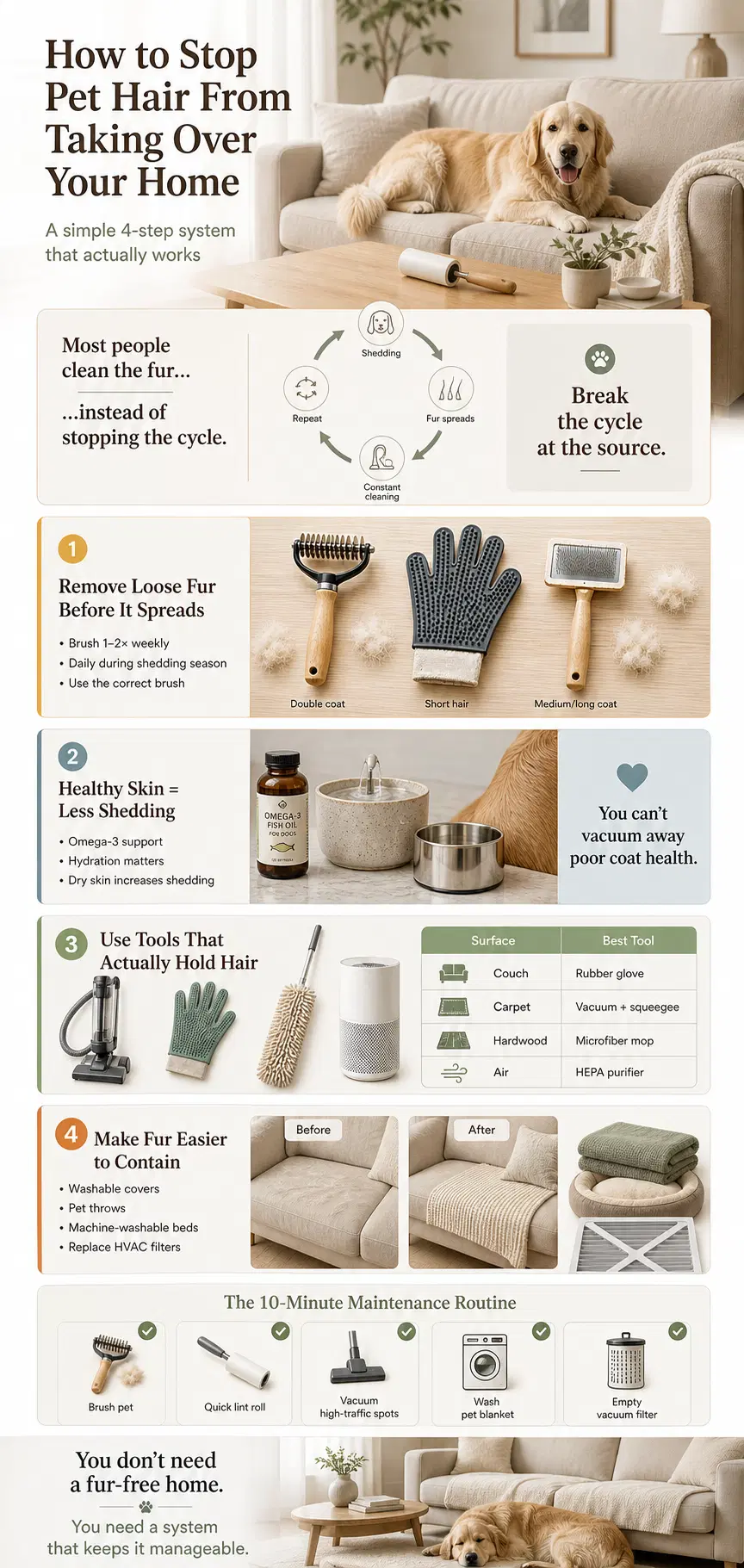
There is no single product that eliminates pet hair entirely. But there is a system that makes it manageable.
Reduce shedding at the source through grooming and nutrition. Capture what does shed with the right tools. Protect surfaces and clean the air strategically.
Most pet owners who adopt this system notice visible improvement within a few weeks. Your pet will still shed, but it just won’t feel like it’s taking over your home anymore.
Frequently Asked Questions (FAQs):
1. What is the fastest way to remove pet hair from a couch or carpet?
For furniture, a damp rubber glove swept across the surface gathers hair into clumps almost instantly — it outperforms most lint rollers on upholstered fabric. On carpet, a window squeegee dragged firmly across the pile pulls up embedded hair that vacuums routinely miss.
2. Why does my pet seem to shed more at certain times of year, and does it ever stop?
Shedding naturally spikes in spring and fall as your pet’s coat transitions between its winter and summer thickness — this is a normal biological cycle, not a sign anything is wrong. It won’t stop entirely, but consistent daily brushing during those peak seasons dramatically cuts down on how much loose hair ends up on your floors and furniture.
3. Can pet hair actually affect my family’s health, and is it worth investing in an air purifier?
Pet hair carries dander — microscopic skin particles that are one of the most common household allergens — and both can circulate through the air long after you’ve cleaned visible fur off surfaces. A HEPA-certified air purifier placed in rooms where your pet spends the most time is genuinely worth it for allergy-prone households, as it traps airborne particles that regular cleaning and vacuuming can’t reach.
- All Posts
- Aesthetic Lovers
- Home Chefs
- Intentional Parents
- Pet Lovers
- Productivity Seekers
- Smart Finds